
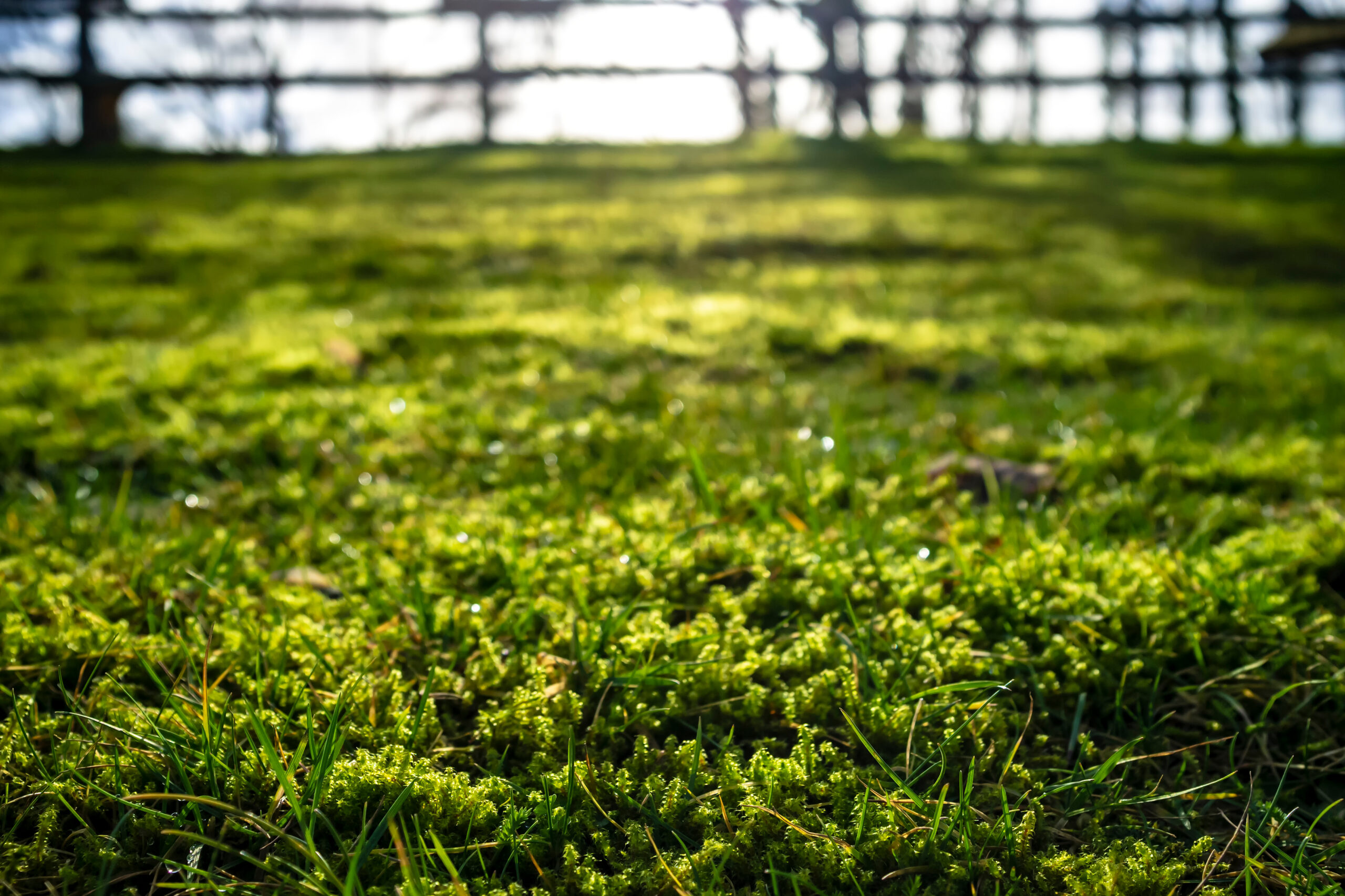
Quick Answer: Moss Points to Lawn Stress
Moss takes over when conditions are not right for grass. Shade, compacted or wet soil, low fertility, and a low mowing height all weaken turf. Moss then fills the bare spots because it needs less light and fewer nutrients than grass. The good news is you can turn it around. Lawn fertilization, combined with better soil conditions and the right grass seed, restores turf density so moss has nowhere to spread.
Lawn fertilization can help stop moss and revive thin turf. Learn why moss replaces grass and how to fix it, get expert tips and schedule service today. Book now.
What Causes Moss to Replace Grass?
Heavy Shade and Low Airflow
Most lawn grasses need a few hours of direct sun to thrive. Under dense tree canopies, next to tall fences, or along north-facing walls, grass thins from lack of light. Low airflow in shady corners keeps surfaces damp longer after rain or dew, which supports moss growth. When grass thins, moss quickly occupies the open soil.
Compacted Soil and Poor Drainage
Foot traffic, pets, and equipment compress the soil. Compaction squeezes out pore space that should hold air and water. The result is shallow roots and puddling after rain. Persistent surface moisture and weak turf are a perfect setup for moss. In many Kenosha area yards with clay soil, a small grade issue or downspout discharge can keep areas wet long enough for moss to spread.
Acidic or Nutrient-Poor Soil
Moss tolerates acidic, low-fertility conditions that grass dislikes. If your soil pH is below 6.0 or you have not fertilized in a while, turf thins and struggles to recover from wear. Lawn fertilization adds the nutrients grass needs to fill in, while lime can raise pH when a soil test calls for it. Without balanced nutrition, moss continues to outcompete weak grass.
Mowing Too Short and Thatch Buildup
Scalping the lawn stresses grass crowns, exposes soil, and encourages shallow roots. Thatch thicker than half an inch holds moisture at the surface. Both issues weaken turf and create the damp, open environment moss loves. A higher mowing height and periodic dethatching keep grass strong and the surface drier.
Wrong Grass for the Site
Some grass varieties handle shade and foot traffic better than others. Using a sun-loving mix in deep shade or a delicate variety where kids and pets play leads to constant thinning. In southeastern Wisconsin, fine fescues do well in shade, while tall fescue holds up in partial shade and traffic. Choose the right seed to match your site and maintenance goals.
Weather Factors in Wisconsin
Snow cover, freeze-thaw cycles, and late spring snow mold can thin cool-season turf in the Kenosha area. When spring arrives, bare patches from winter injury are prime real estate for moss. Quick overseeding and proper lawn fertilization in spring and fall help grass recover before moss spreads.
Can Lawn Fertilization Really Fix a Mossy Lawn?
Lawn fertilization is not a silver bullet, but it is a core part of a lasting solution. Fertilizer feeds grass plants so they grow thicker and develop deeper roots. Dense, healthy turf shades the soil and uses available moisture, which makes it harder for moss to take hold. When paired with a soil test, you can correct nutrient gaps and adjust pH so grass is comfortable and moss is less welcome. For many lawns, a balanced slow-release fertilizer in spring and fall, combined with good mowing and watering habits, noticeably reduces moss pressure within a season.
If drainage is poor or shade is extreme, fertilizer alone will not solve the problem. That is where an integrated approach from the doctors of landscaping helps. We combine targeted moss control, core aeration, overseeding with the right varieties, and a custom lawn fertilization plan to build turf that resists moss year after year.
Step-by-Step Plan to Get Grass Growing Again
- Assess sunlight and moisture. Note how many hours of sun each area receives and where water lingers after rain. Mark the worst moss patches.
- Test your soil. A professional test reveals pH and nutrient levels. Aim for a pH near 6.0 to 7.0 for most cool-season grasses. The Doctors of Landscaping can collect and interpret tests for you.
- Improve light and airflow. Selective pruning of lower tree branches and thinning dense shrubs can increase filtered light and help turf dry out faster. Avoid topping trees. Use proper pruning practices to protect tree health.
- Fix drainage and compaction. Redirect downspouts away from the lawn, regrade small low spots, and consider a French drain if water collects. Core aeration relieves compaction and allows air, water, and nutrients to reach the roots.
- Remove excess thatch. If thatch is over half an inch, use a dethatching rake or power rake, then clean up debris. This step reduces surface moisture that favors moss.
- Apply targeted moss control if needed. Iron-based moss control products are effective. Treat when temperatures are cool and the ground is not frozen. Rake out dead moss after it blackens.
- Start a lawn fertilization program. Use a slow-release, nitrogen-forward fertilizer in spring to help turf fill in, and follow with balanced feedings as the season progresses. Base rates and timing on your soil test and grass type.
- Overseed with the right mix. After aeration and moss removal, overseed with shade-tolerant blends in low-light areas and durable mixes where traffic is high. Keep seed moist until it germinates and establishes.
- Water deeply and less often. Train roots to grow down by watering 1 to 2 times per week as needed, delivering about an inch of water total, including rainfall. Avoid daily light watering that keeps the surface damp.
- Raise the mowing height. Aim for 3 to 4 inches for cool-season lawns. Tall blades shade the soil, hold moisture in the root zone, and block moss.
- Monitor and adjust. Track progress, address new drainage issues quickly, and fine-tune your lawn fertilization schedule. Expect steady improvement over one or two growing seasons.
The Right Grass Seed for Shady Southeastern Wisconsin Yards
Choosing seed that matches your lawn conditions makes the biggest difference long term. In the Kenosha area, cool-season grasses perform best. Here are dependable options that can outcompete moss once site issues are managed:
- Fine fescues. Creeping red, chewings, and hard fescue tolerate shade and lower fertility better than most grasses. They need less mowing and can do well under trees with filtered light.
- Tall fescue. Modern turf-type tall fescue has good wear tolerance, deeper roots for drought resistance, and moderate shade tolerance. It is a smart choice for partial shade with foot traffic.
- Perennial ryegrass. Germinates quickly to cover bare spots and outpace moss in sunnier areas. Often used in mixes for fast establishment.
- Kentucky bluegrass. Excellent in full sun with irrigation. It spreads to fill gaps but needs more light and fertility than fine fescues.
In the deepest shade where grass will never thrive, consider an alternative groundcover or a mulch bed. The Doctors of Landscaping can help you redesign stubborn moss zones with plantings or hardscaping that look polished and reduce maintenance.
Safe Ways to Remove Existing Moss
You can clear moss while protecting your grass by using the right methods at the right time.
- Manual raking. Use a metal rake to lift and remove moss from the surface. This also loosens the top layer of soil for overseeding.
- Iron-based moss control. Products with iron sulfate or chelated iron blacken moss quickly. Follow label directions to avoid staining concrete or stone. Water lightly after application if recommended.
- Time your work. Spring and fall, when weather is cool and moist, are ideal for moss control followed by overseeding. Avoid mid-summer applications during heat stress.
- Prep for seeding. After moss dies, rake it out fully, loosen soil, and topdress thin areas with compost before spreading seed.
A Proven Lawn Fertilization Schedule for Kenosha Area Lawns
A thoughtful schedule gives grass what it needs when it needs it. Your exact plan should follow a soil test, but this outline works well for many cool-season lawns.
Early Spring
Apply a slow-release fertilizer to wake up turf and support new growth. If crabgrass is a problem, use a pre-emergent weed control with fertilizer, timed before soil temperatures reach germination thresholds. Water in as directed.
Late Spring
Feed again with a balanced fertilizer to build density before summer. Spot treat broadleaf weeds. Keep mowing height at 3 inches or higher to shade the soil.
Summer
Use a lighter, slow-release feeding as needed. Avoid heavy nitrogen during heat and drought. Water deeply and infrequently, preferably in the morning. Maintain sharp mower blades to reduce stress.
Late Summer to Early Fall
Core aerate, overseed thin areas, and apply a starter fertilizer to support seedling growth. This is the most important window for building turf that can outcompete moss next spring.
Late Fall Winterizer
Apply a winterizing fertilizer with an emphasis on potassium and a moderate amount of nitrogen. This supports root strength and carbohydrate storage, promoting early green-up and thicker turf next season.
Every lawn is unique. The Doctors of Landscaping customizes lawn fertilization plans based on your soil test, shade patterns, traffic, and irrigation setup to deliver consistent results without waste.
Why Work With The Doctors of Landscaping?
The Doctors of Landscaping is a locally owned and operated company in Kenosha, Wisconsin with more than 30 years of experience. What started as a small lawn maintenance service is now a full-service provider you can rely on year-round. Our team handles lawn mowing, edging, and clean-up, bed and planting services, patios, walkways, and retaining walls, plus seasonal work like spring and fall cleanups and snow removal for residential and small commercial properties.
We focus on the details that make a difference, from proper installation practices to clean job sites and efficient scheduling. When it comes to moss and thin turf, we combine science-based lawn fertilization, core aeration, overseeding, drainage fixes, and smart pruning to solve the cause, not just the symptom. Clients choose the doctors of landscaping because we show up on time, communicate clearly, and stand behind our work. With free estimates and one dedicated provider for everything outdoors, it is easy to keep your property looking its best.
FAQs About Moss and Lawn Fertilization
Will lime alone get rid of moss?
No. Lime raises soil pH when a soil test shows acidity, which helps grass grow better. But lime does not kill moss by itself. You need to improve light and drainage, reduce compaction, and build turf with overseeding and lawn fertilization.
Is moss bad for my lawn?
Moss is not harmful by itself, but it signals that conditions do not favor grass. If you want a turf lawn, treat moss as a symptom to diagnose. Correct the underlying issues so grass can return and stay healthy.
Can I grow grass under mature trees?
Often yes, but expectations matter. With selective pruning to increase filtered light, core aeration to reduce root competition, fine fescue seed blends, and careful lawn fertilization, you can maintain a respectable lawn under many trees. In full, deep shade, a mulch bed or shade garden may be the smarter long-term choice.
How long will it take to see results?
You can see early improvement within a few weeks after moss control, aeration, and fertilization, especially in spring and fall. Full transformation usually takes one to two growing seasons as overseeded grass fills in, soil structure improves, and a consistent program takes hold.
Should I use a moss killer before seeding?
Yes in most cases. Use an iron-based moss control, wait for moss to blacken, rake it out, then loosen soil and seed. This sequence gives seedlings open contact with soil and reduces competition during establishment.
Do I need irrigation to beat moss?
Not always. Deep, occasional watering helps grass and discourages moss. If your site is very dry between rains, a simple, well-timed irrigation schedule can help grass outcompete moss. Avoid frequent, shallow watering that keeps the surface damp.
Ready to Trade Moss for Lush Grass?
If moss is sending a message, we can help you answer it. The Doctors of Landscaping will diagnose the causes on your property and create a practical plan that fits your budget. From soil testing and lawn fertilization to aeration, overseeding, pruning, drainage, and clean-up, our team handles every step. Schedule a free estimate today and see why homeowners across Kenosha trust the doctors of landscaping for dependable, detailed, and long-lasting lawn care. Book now and get your lawn on the path to thick, green turf that leaves no room for moss.

Leave A Comment