
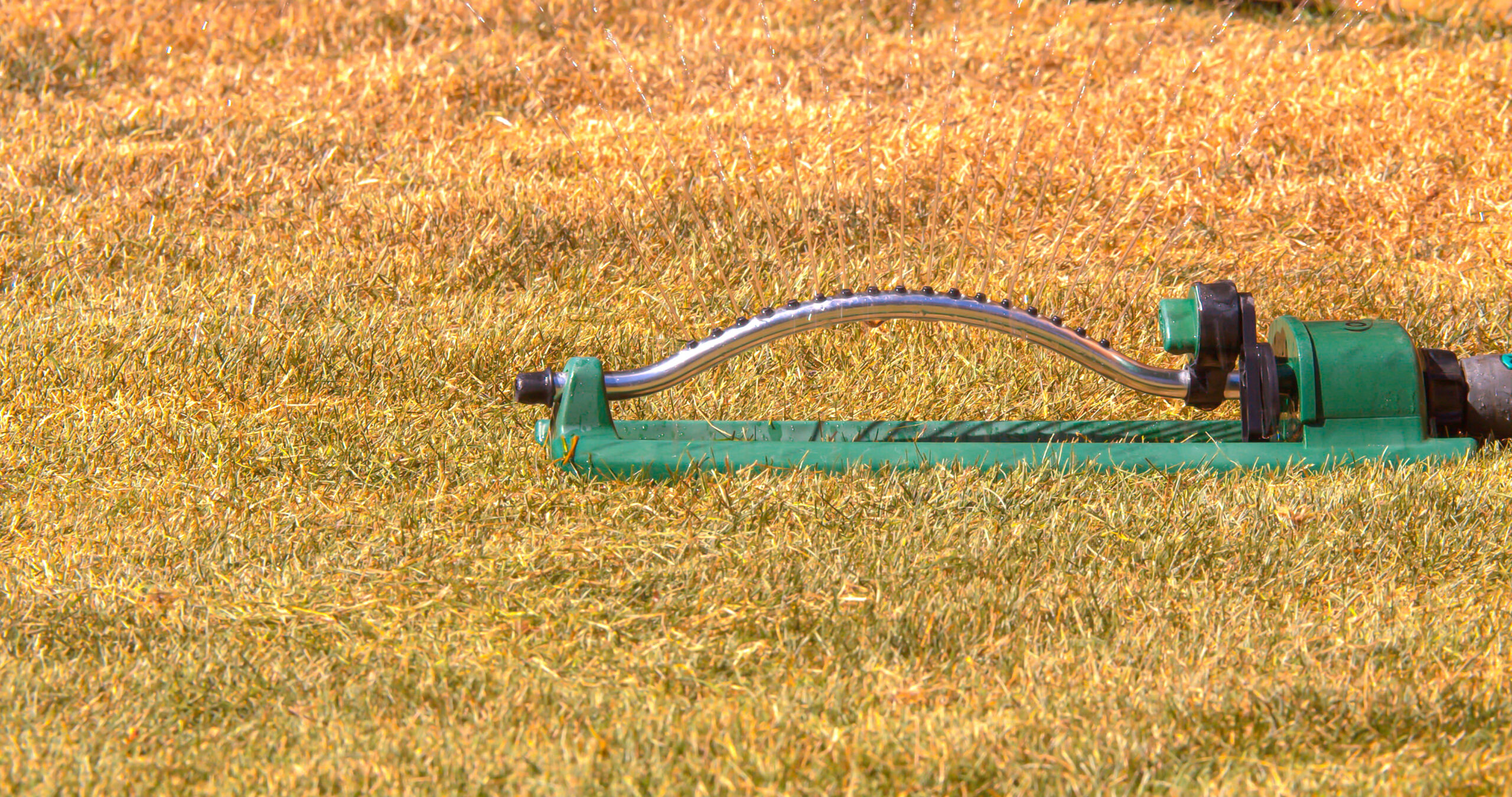
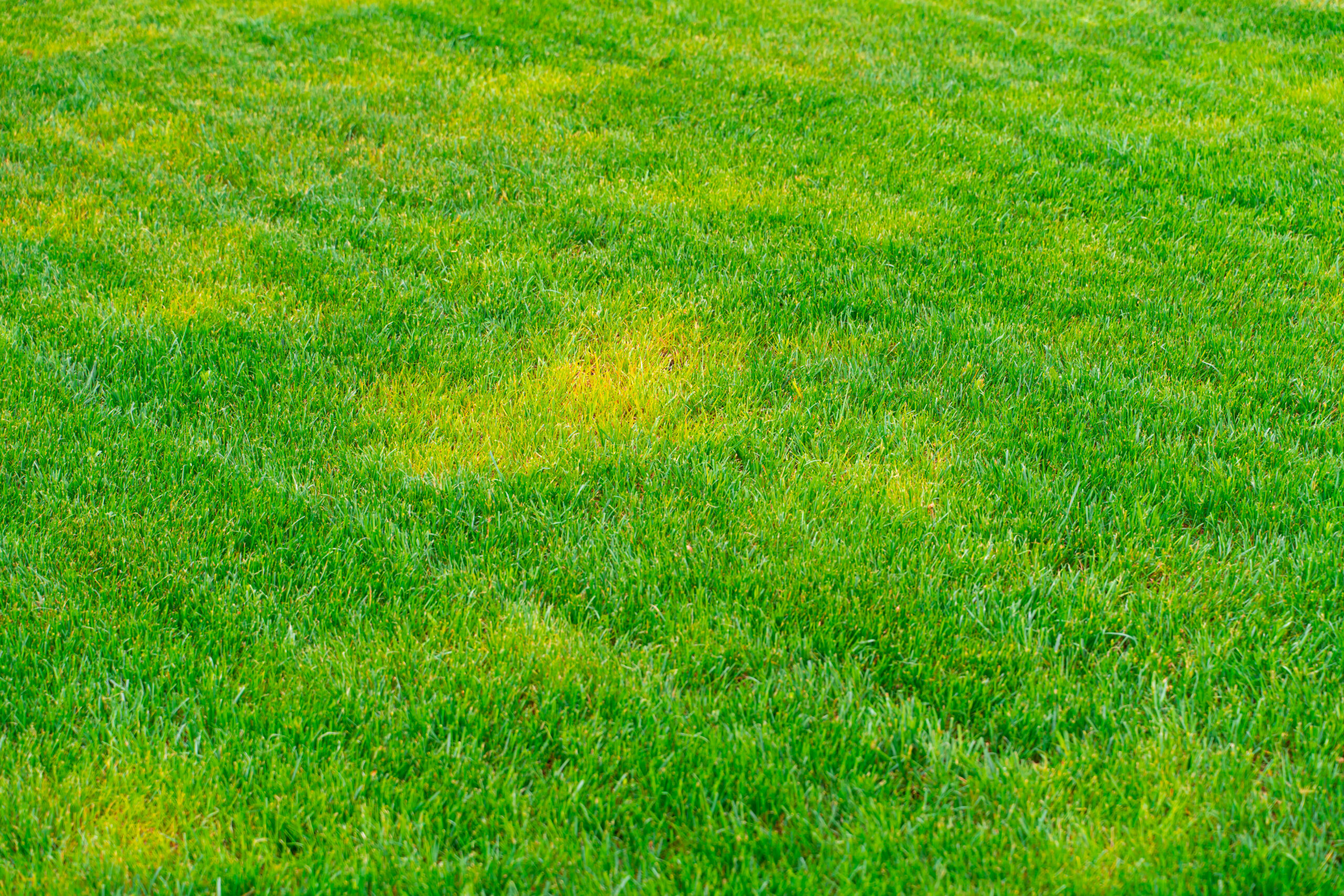
Yellow grass after lawn fertilization is usually the result of fertilizer burn, watering errors, or nutrient imbalances. Applying too much nitrogen, using fast-release products in hot weather, or failing to water correctly can stress turf and bleach the blades. Other contributors include soil pH issues, compaction, thatch buildup, disease, pests, pet urine, or de-icing salts. The fastest fix is to flush the lawn with water, remove stray granules, pause further feeding, and address soil and irrigation problems. If you are unsure what caused the damage, the Doctors of Landscaping in Kenosha can diagnose the issue and build a recovery plan.
How Fertilizer Can Cause Yellow Grass
Nitrogen Burn From Overapplication
Most fertilizers contain salts. When you apply too much, those salts pull water out of grass blades and roots. The result is desiccation that shows up as yellow or brown streaks, splotches, or entire patches that look bleached. Fast-release nitrogen is the biggest culprit because it delivers a quick surge that the plant cannot safely absorb. Granules that land on wet blades or clump in one spot can also burn leaves.
Common signs of fertilizer burn include a yellow stripe along a spreader pass, crispy leaf tips, and a sharp edge where an overlap or missed strip occurred. If this looks familiar, take action quickly with water to dilute and move salts below the root zone.
Improper Timing and Weather Stress
Fertilizing at the wrong time can turn a routine feeding into a stress event. In hot, dry weather, salts accumulate faster and the lawn transpires more, both of which heighten burn risk. Fertilizing during a heatwave, in full midday sun, or right before a stretch of drought often leads to yellowing. Conversely, fertilizing when soil is waterlogged can smother roots and cause chlorosis from lack of oxygen.
In Kenosha and the broader southeast Wisconsin area, most lawns are cool-season grasses like Kentucky bluegrass, perennial ryegrass, and fescues. These species prefer lawn fertilization in early fall and late fall, with a light feeding in late spring. Summer apps should be light and slow-release, if at all, to avoid stress in warm conditions.
Wrong Product or Rate for Your Lawn
Using a formulation that is too strong or applying more than the label rate is a fast route to yellow grass. Weed-and-feed products combine fertilizer with herbicide. While convenient, they can damage desirable turf if used in the wrong season or on newly seeded areas. High-nitrogen products that push rapid top growth can invite disease and make the lawn look lime green to yellow if the plant cannot balance other nutrients like potassium and iron.
Always follow the label, measure your lawn area, and calibrate your spreader. If you are unsure which product matches your grass type and soil, the Doctors of Landscaping can recommend a balanced, slow-release fertilizer program tailored to Kenosha’s climate and your yard’s needs.
Other Reasons Your Lawn Yellows After Fertilizing
Watering Mistakes
Watering too little after a granular application is a classic mistake. Granules need moisture to dissolve and move into the soil. Without it, salts remain concentrated near the crown and leaf tissue. On the other hand, overwatering right after lawn fertilization can leach nitrogen past the roots. That deprives turf of nutrients and can cause a pale, washed-out color known as chlorosis. Deep, even watering is the sweet spot.
Soil pH and Nutrient Lockout
Even when you fertilize correctly, a lawn can turn yellow if soil pH is off. Cool-season grasses prefer a pH of about 6.0 to 7.0. Outside that range, iron, phosphorus, and other micronutrients can become unavailable to the plant, which causes yellowing between leaf veins. If you have been feeding and watering but color remains weak, a soil test can reveal pH and nutrient levels. Liming acidic soil or adding elemental sulfur to lower pH might be necessary.
Compacted Soil and Thatch
Compacted soil restricts oxygen, root growth, and water infiltration. Fertilizer will sit on the surface or run off instead of soaking into the root zone. Thatch thicker than a half inch acts like a sponge, holding salts near the crowns and creating conditions for burn and disease. Core aeration relieves compaction, and dethatching reduces that layer so nutrients get where they need to go.
Disease and Insect Pressure
Some turf diseases, like dollar spot or leaf spot, thrive after a heavy nitrogen application or during humid spells. They can cause yellow to straw-colored patches that look a lot like fertilizer damage. Grub infestations reduce root mass, so the lawn cannot take up water or nutrients well. Tug gently on the sod. If it lifts easily like a carpet, grubs might be at work. An expert can confirm and recommend a targeted treatment.
Pet Spots and De-icing Salts
Concentrated nitrogen in pet urine creates circular patches that bleach the lawn. De-icing salts tracked or plowed onto the grass can do the same. Flushing those areas with water helps, and gypsum can support recovery where sodium is an issue.
Step-by-Step Fix: What To Do Right Now
- Pause further fertilizing. Stop feeding until the lawn recovers and you identify the cause.
- Flush with water. Irrigate deeply to move salts below the root zone. Aim for a half inch of water now and again tomorrow morning. Use a rain gauge or a small tuna can to measure output. Repeat for three to four days if the lawn looks severely stressed.
- Remove stray granules. Blow or gently sweep any remaining fertilizer off leaf blades and hard surfaces. Granules sitting on leaves can burn tissue.
- Inspect for patterns. Stripes suggest uneven spreader passes. Circular patches may point to pet damage or disease. Sod that peels up could signal grubs.
- Test the soil. A basic soil test checks pH and nutrient levels. Knowing your baseline prevents overcorrecting and helps you choose the right formulation.
- Check the spreader. Verify you used the right setting and walked at a steady pace. Calibrate before your next application.
- Water correctly going forward. Once the immediate flush is done, resume a deep, infrequent schedule. Most cool-season lawns need about 1 to 1.5 inches of water per week from rain and irrigation combined.
- Overseed thin spots. After flushing, rake lightly and overseed with a mix suited to southeast Wisconsin, such as Kentucky bluegrass and perennial ryegrass. Keep seed moist until it germinates.
- Address compaction and thatch. Core aeration improves oxygen and water movement. Dethatch if the layer exceeds a half inch.
- Treat pests or disease if confirmed. Choose targeted products and follow labels closely. Avoid blanket treatments without a diagnosis.
Preventing Yellow Grass After Lawn Fertilization
- Choose slow-release nitrogen. Products with polymer-coated urea or natural organics feed steadily and lower burn risk.
- Split applications. Instead of one heavy feeding, apply smaller amounts more often during the growing season.
- Match the rate to the label. Most cool-season lawns should receive no more than 0.75 to 1 pound of nitrogen per 1000 square feet per feeding.
- Time it right. In Wisconsin, prioritize early fall and late fall feedings. Keep summer applications light and avoid extreme heat or drought.
- Water in after granular applications. Aim for a quarter to a half inch to dissolve granules without causing runoff.
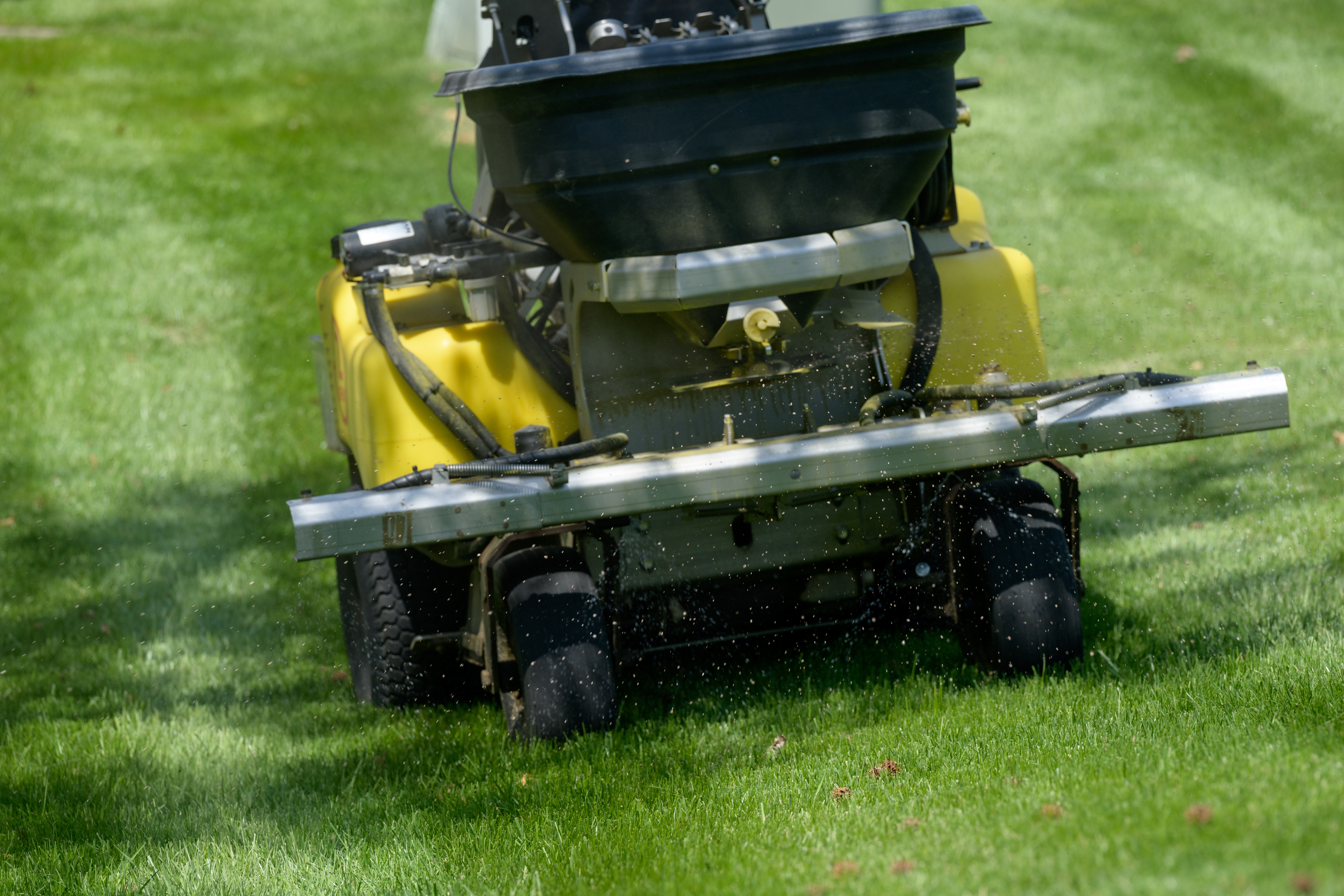
- Calibrate your spreader. Test on a 1000 square foot area and adjust until the output matches the target rate.
- Avoid weed-and-feed on stressed or newly seeded lawns. Treat weeds and fertilize in separate steps when possible.
- Mow high. Keep cool-season grass at 3 to 4 inches. Taller blades shade the soil, deepen roots, and resist stress.
- Recycle clippings. Mulched clippings return nutrients to the soil and reduce total fertilizer needs.
- Manage soil health. Aerate compacted lawns, dethatch when needed, and amend soil based on a test.
- Rinse hard surfaces. Sweep or blow fertilizer off driveways and walks. It protects water quality and your lawn.
How Much Fertilizer Does My Lawn Really Need?
For most cool-season lawns in Kenosha, 3 to 4 pounds of nitrogen per 1000 square feet per year is sufficient. Focus on two to three main feedings. A proven plan is a light late spring application, a heavier early fall feeding, and a final winterizer application in late fall once growth slows but before the ground freezes. If the lawn gets heavy use or the soil is sandy, consider spoon-feeding small amounts during summer with slow-release nitrogen. Always let a soil test guide phosphorus and potassium inputs.
If your yard has mixed shade and sun, adjust. Shaded turf needs less nitrogen since it grows more slowly. In full sun with frequent traffic, stronger but still measured nutrition maintains density. The Doctors of Landscaping fine-tune programs zone by zone within a property, which often prevents the yellowing that occurs when a one-size-fits-all approach overshoots the mark.
Calibrating Your Spreader
- Measure 1000 square feet. A 20 by 50 foot rectangle works. Mark the area with flags.
- Weigh the product needed. If the bag calls for 3.0 pounds per 1000 square feet, weigh out exactly that amount.
- Set and test. Start with the manufacturer’s setting. Walk at a steady pace and apply to the marked area.
- Reweigh leftovers. If you have product remaining, open the setting slightly. If you run out early, close it slightly.
- Overlap correctly. Make half-width passes along edges and overlap wheel tracks in the middle to avoid stripes.
Watering After Fertilizing: The Right Way
Water is the bridge that carries nutrients into the soil. Right after granular lawn fertilization, apply a quarter to a half inch of water to dissolve and move granules off the blades. For the rest of the week, aim for deep, infrequent watering that totals about an inch, unless rainfall covers it. Sandy soils may need shorter, more frequent cycles to prevent runoff. Clay soils may benefit from cycle-and-soak watering to let water soak in without pooling. Morning is best to reduce evaporation and disease risk.
Watch for run-off. If water begins to puddle or flow off the lawn during the initial post-fertilizer watering, pause, let it soak in, and resume. This keeps nutrients where they belong and reduces the chance of yellow edges along sidewalks or driveways.
FAQs
- How long does it take for burned grass to recover? Mild burn can improve within one to two weeks with proper watering. Severe burn may require overseeding and can take a month or more.
- Can yellow grass turn green again? Yes, if crowns and roots are alive. Consistent watering, proper mowing, and balanced nutrition help. Dead patches will need seed or sod.
- Should I mow after fertilizing? Wait one to two days after a granular application so granules can settle and water in. Keep blades sharp to avoid shredding stressed grass.
- Is organic fertilizer safer? Organic and slow-release products reduce burn risk. They still require correct rates and timing.
- What temperature should I fertilize in Wisconsin? For cool-season lawns, target 50 to 70 degrees soil temperatures in spring and fall. Avoid heavy feeding during hot, dry periods.
Why Work With The Doctors of Landscaping
The Doctors of Landscaping is a locally owned and operated company based in Kenosha, Wisconsin, with more than 30 years of hands-on experience. What started as a small lawn maintenance service is now a full-service provider trusted for lawn mowing, edging, clean-up, bed and planting services, hardscapes like patios and retaining walls, seasonal maintenance, and snow removal for residential and small commercial properties. Clients value our reliability, attention to detail, and proper installation practices. We schedule efficiently, provide free estimates, and complete thorough clean-up after every visit. When you choose the doctors of landscaping, you work with one dedicated provider for all your outdoor needs, and you get a team that understands how local weather, soil, and grass types respond to lawn fertilization.
Lawn yellowing can look the same on the surface yet have very different causes. Our team brings technical know-how to separate fertilizer burn from disease or compaction, then prescribes the right fix. That saves time, prevents repeated damage, and gets your lawn green again sooner.
Our Approach to Lawn Fertilization and Recovery
- Site evaluation. We walk the property, note grass types, sun and shade patterns, traffic areas, and irrigation coverage.
- Soil testing. We test pH and nutrient levels so we can tailor inputs and avoid over or under application.
- Custom fertilizer plan. We use slow-release fertilizers with balanced nutrients and time applications to Wisconsin’s growing cycles.
- Spreader calibration and precise application. We calibrate equipment and apply evenly to avoid stripes and hot spots.
- Watering guidance. We set practical schedules and run times that match your soil type and system.
- Aeration and thatch management. Where compaction or thatch is a factor, we core aerate or dethatch to improve root health.
- Overseeding and topdressing. We repair thin or burned areas with quality seed mixes suited to Kenosha and topdress for better seed-to-soil contact.
- Disease and pest monitoring. We scout for issues like dollar spot or grubs and provide targeted treatments only when needed.
- Seasonal maintenance. We integrate mowing height, blade sharpness, and clean-up into the plan so your investment in lawn fertilization pays off.
Get Help Today
If your lawn turned yellow after fertilizing, do not wait for it to fix itself. Quick action makes the difference between a minor setback and a full renovation. The Doctors of Landscaping brings the experience and local insight to diagnose the cause, flush salts safely, and build a fertilization and watering plan that restores deep green color. Contact the doctors of landscaping for a free estimate, efficient scheduling, and dependable service. We will get your grass back on track and keep it that way, season after season.

Leave A Comment