
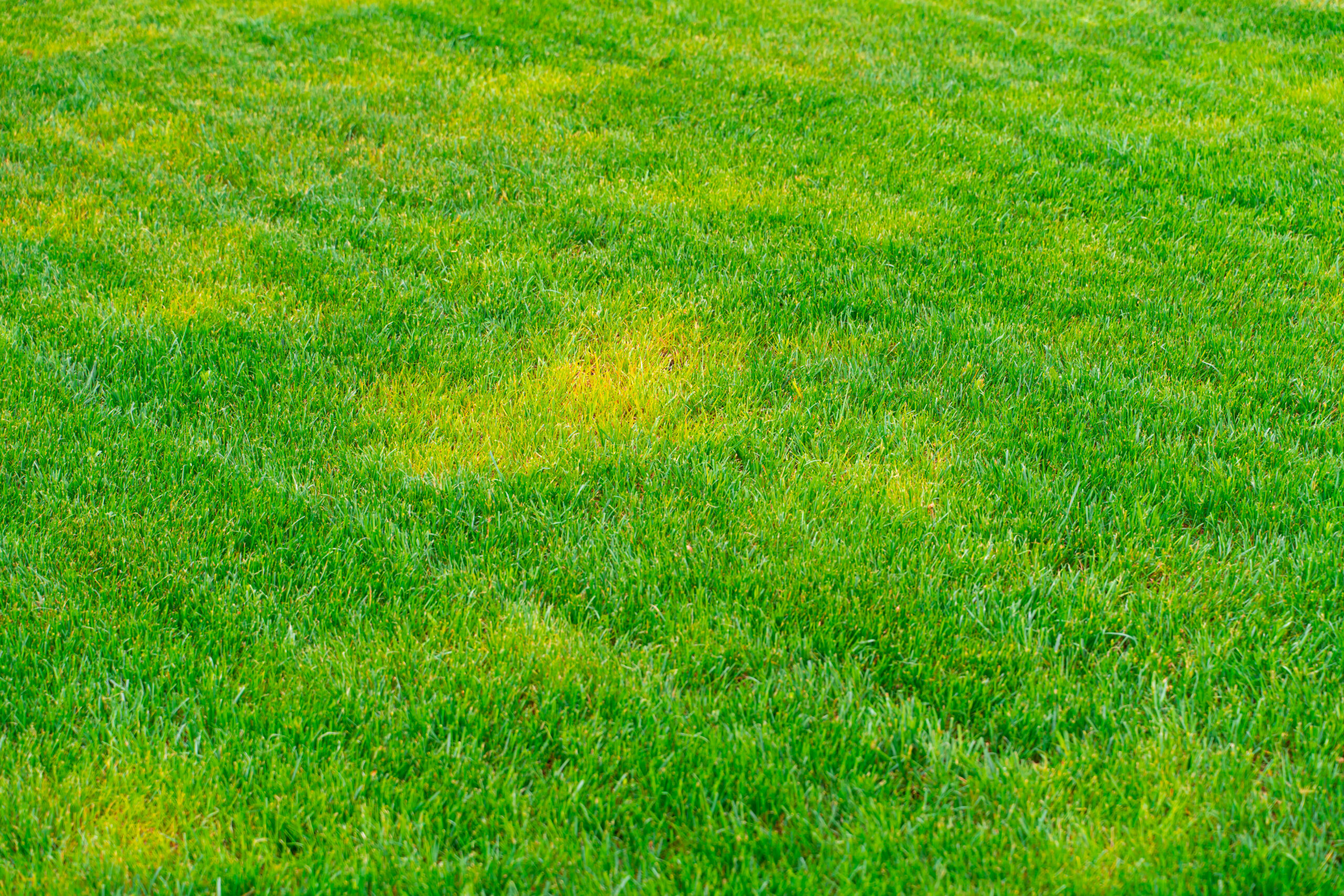
Lawn fertilization mistakes can cause dark and light green yard spots. Learn why they appear and how to fix them. Get expert tips and book a service today. Act now.
What Those Color Patches Are Telling You
Patchy lawn color is your yard trying to talk to you. Dark green streaks often mean one area received more nutrients or water. Pale, light green patches often mean areas were skipped during lawn fertilization or are stressed by soil or water issues. In cool season lawns common in Kenosha and across Southeast Wisconsin, color shifts are usually tied to nitrogen, iron, watering, shade, or soil compaction. Understanding the pattern helps you fix the problem fast and prevent it from returning.
Top Causes of Dark Green and Light Green Spots
Uneven lawn fertilization
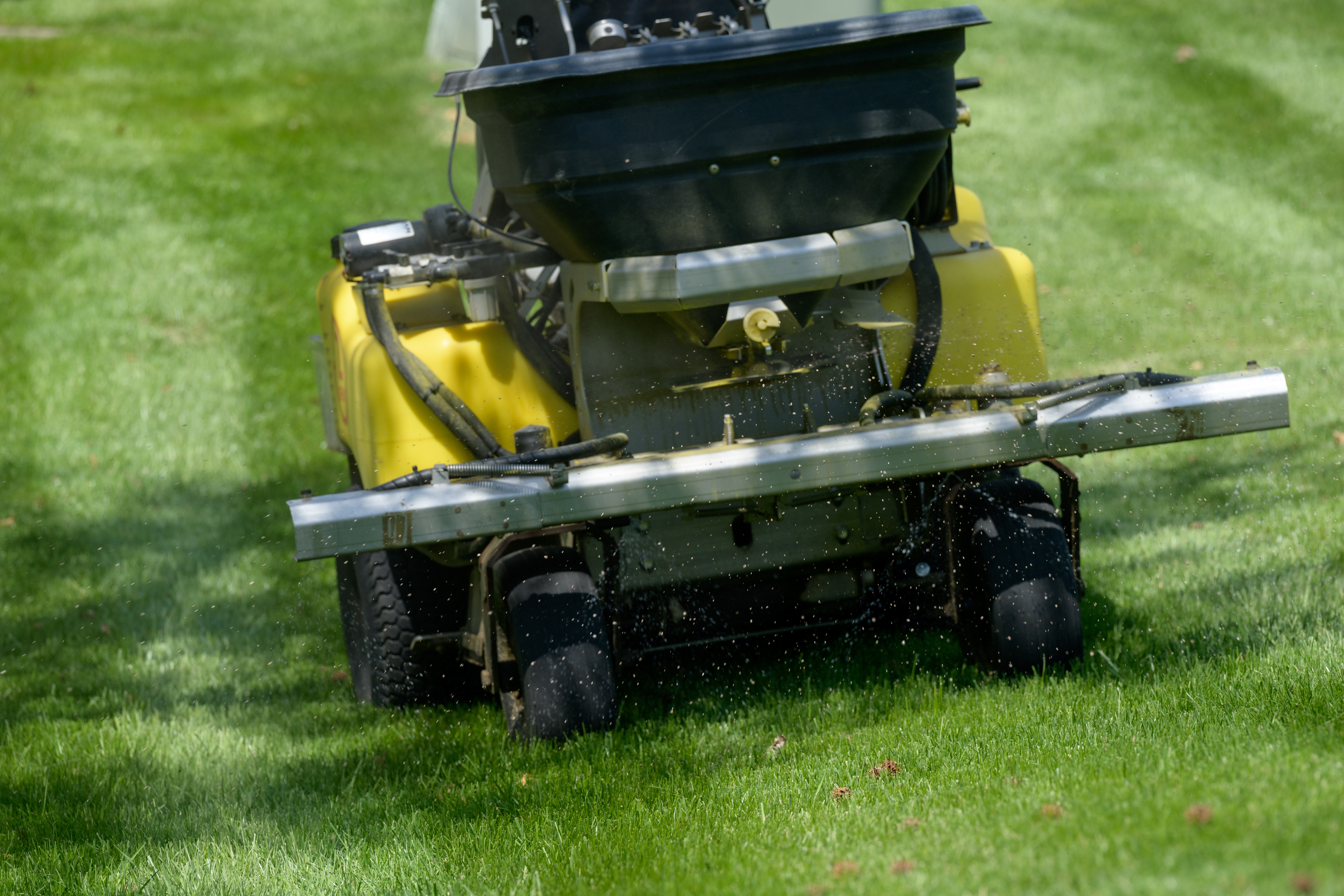
The most common reason for mixed lawn color is uneven fertilizer application. When a spreader overlaps too much, turns too sharply, or is set too high, some strips get extra nitrogen and turn dark green. Areas that were missed or under-applied stay a lighter shade. Quick release fertilizers exaggerate these stripes because grass responds fast to the nitrogen surge. Slow release products give steadier color, but they can still stripe if the application is inconsistent.
- Too much nitrogen in one pass can create dark, fast-growing bands or even burn around edges.
- Too little nitrogen leaves pale bands that do not fill in.
- Iron blended in some fertilizers can cause dark green splotches where it was concentrated.
- Using a drop spreader without strict parallel passes can create alternating light and dark lines.
Irrigation coverage gaps
Sprinklers that do not reach head to head leave dry zones that look light green or even straw colored during heat. Overwatered zones can look deep green for a while, but they also invite shallow roots and disease. Clogged nozzles, low pressure, tilted heads, and wind drift all cause uneven color patterns that look like fertilizer mistakes, even if your lawn fertilization was perfect.
Soil pH and nutrient lockout
Grass uses nutrients best when soil pH is in the 6.2 to 7.0 range. If pH is too high, iron can be present but unavailable, so parts of your lawn look washed out or yellow. If pH is too low, roots struggle and growth slows. Patchy soil conditions, fill dirt, or past construction often create pockets with different pH, which show up as uneven color.
Pet urine and small nitrogen bursts
Dog urine delivers a high dose of nitrogen and salts. At low to moderate levels it can create dark green rings where the nutrients spread at the edges. At higher levels it burns a brown center with a dark green halo. These spots often reappear in the same areas and are easy to confuse with fertilizer spill patterns.
Shade, temperature, and microclimates
Areas shaded by trees, fences, or your home often look lighter because they receive less sun. They also dry out slower. Along sidewalks and driveways, heat can push deeper green growth in spring, then stress areas in midsummer. Low spots that stay cool and damp may stay greener during dry weather but can pale out after disease or root stress.
Thatch and soil compaction
Compacted soil limits air and water to roots. Thatch thicker than about a half inch can block nutrients and water from reaching the soil. Roots become shallow and color suffers. Compaction often forms in high traffic paths, along fence lines, and where mowers turn. These areas usually appear lighter green with thin turf.
Disease or insect pressure
Some fungal diseases start as subtle color changes before they thin the turf. Leaf spot, dollar spot, and summer patch can show as patchy light green areas that slowly enlarge. Grubs or surface insects can also create weak, pale patches. If the grass pulls up easily or you see irregular bite damage, insects may be the cause.
How to Diagnose the Real Cause
- Map the pattern. Straight stripes point to spreader or mowing issues. Curved or circular areas point to water, pets, soil, or disease.
- Check mower height and blade sharpness. A dull blade tears leaves and makes them look gray green. Set height at 3 to 4 inches for cool season turf to keep color and root depth.
- Audit your irrigation. Place shallow cups around the lawn and run the system for 15 minutes. Compare water levels to see how even the coverage is. Adjust or repair as needed.
- Review your last lawn fertilization. Note the date, product, rate, and how you walked the yard. If you used a broadcast spreader, think about where you turned or overlapped.
- Inspect the spreader. Clean clogged ports, check for worn impellers, and recalibrate. A mis-set spreader throws heavier to one side and creates bands.
- Look for pet patterns. Repeated spots near walkways or corners usually link to pet routes.
- Test the soil. A professional soil test reveals pH and nutrient levels. This is the fastest way to solve long term color problems.
- Pull a small core. If thatch is thick or soil is hard and gray, compaction or thatch is likely a main cause.
Fixes You Can Do Right Now
Correct your lawn fertilization technique
Even coverage is the key to even color. For most cool season lawns, plan for a moderate feeding that delivers about 0.5 to 0.9 pounds of actual nitrogen per 1000 square feet per application, unless the product label instructs differently. Choose a slow release fertilizer with at least 30 to 50 percent slow release nitrogen for steadier color.
- Calculate the rate. If your fertilizer is 32 percent nitrogen and you want to apply 0.75 pounds of nitrogen per 1000 square feet, apply about 2.3 pounds of product per 1000 square feet. Always follow the product label.
- Calibrate the spreader. Measure a 1000 square foot test area, weigh the product needed, and adjust the setting until the test area uses the correct amount.
- Apply in a crosshatch. Make one pass north to south and a second pass east to west, each at half rate. Walk at a steady pace and keep the impeller spinning before you move.
- Start and stop on a hard surface. Open and close the hopper while you are already moving to avoid dumping a pile.
- Water in as directed. If the product calls for watering, apply about a quarter to a half inch within 24 hours to move nutrients off the leaf and into the soil. Avoid runoff.
Even out existing stripes
- Lightly spoon feed the pale areas with a low rate of nitrogen or a liquid iron product to blend color. Stay conservative to avoid new dark bands.
- Rinse or water spots where fertilizer was accidentally spilled to prevent burn.
- Use a different mowing pattern for a few weeks to reduce the visual impact while color evens out.
Dial in irrigation
- Adjust nozzles for head to head coverage so each sprinkler reaches the next.
- Fix clogged filters, replace worn nozzles, and straighten tilted heads.
- Water deeply and less often. Aim for about 1 inch of total water per week from rain and irrigation during the growing season. Use cycle and soak on slopes or compacted areas.
Relieve compaction and thatch
- Core aerate in early fall when cool season grass recovers quickly. This reduces compaction and boosts root growth.
- Overseed after aeration to thicken thin areas. Choose a blend that matches your lawn such as Kentucky bluegrass and perennial ryegrass for Kenosha area lawns.
- Topdress with a thin layer of compost to improve soil structure and even out minor low spots.
- Dethatch if the thatch layer is thicker than a half inch. Do this during active growth and follow with watering.
Balance soil pH and micronutrients
- If soil pH is below 6.0, a soil test may recommend lime. Apply only as directed by the test, and split large amounts into multiple applications.
- If pH is above 7.5, elemental sulfur may be recommended by your soil test to gently lower pH over time. Follow the rate carefully.
- For yellowing from iron deficiency at higher pH, use an iron chelate labeled for high pH soils. For neutral to slightly acidic soils, iron sulfate can boost color during cool weather.
Address pets without harming the lawn
- Rinse pet spots with water soon after they happen to dilute salts and nitrogen.
- Train pets to use a mulched or gravel area to protect the main lawn.
- Gypsum will not fix nitrogen burn, but it can help soil structure in heavy clay when used as part of a complete soil plan.
When color problems signal disease
If patches start small and expand with a tan border or show lesions on leaves, disease may be present. Improve airflow by pruning, water in the morning, and avoid heavy nitrogen in hot weather. If the problem continues, consult a professional. Accurate diagnosis is important before any fungicide is used.
Seasonal Guidance for Kenosha and Southeast Wisconsin
Cool season grasses in our area respond best to a simple, steady plan. The doctors of landscaping recommends this general schedule for many home lawns, adjusted to your soil test and turf type:
- Early spring: Light feeding only if color is poor. Focus on cleaning up debris, sharpening mower blades, and setting irrigation checks.
- Late spring: Balanced lawn fertilization at a moderate rate. Consider a preemergent for crabgrass based on soil temperature.
- Early summer: If irrigated, spoon feed at a low rate to maintain color. If not irrigated, pause feeding during heat and protect the lawn by mowing higher.
- Early fall: The most important feeding of the year. Apply a solid rate to repair summer stress, improve density, and deepen color.
- Late fall: A final application after the last mow while grass is still green, often called a winterizer, supports strong spring green-up without a growth surge.
In our Lake Michigan climate, wind and lake effect can change moisture and temperature across short distances. That is why two lawns on the same street can look different. A local, data-driven approach beats generic advice.
Why Choose the doctors of landscaping for a Consistent, Even-Green Lawn
The Doctors of Landscaping is a locally owned and operated company based in Kenosha, Wisconsin, with more than 30 years of experience. What started as a small maintenance business has grown into a full service provider for mowing, edging, clean-up, planting beds, patios, walkways, retaining walls, seasonal care, and snow removal. When it comes to lawn fertilization, even coverage and proper timing are where our team shines. We combine reliable scheduling with attention to detail so your lawn looks even and stays healthy.
- On-site diagnosis tailored to your yard’s soil, sun, and irrigation pattern.
- Professional soil testing with clear recommendations you can understand.
- Calibrated equipment and crosshatch application methods for even color.
- High quality slow release fertilizers chosen for Wisconsin turf and weather.
- Irrigation checks to correct coverage gaps that cause color streaks.
- Core aeration, overseeding, and topdressing to fix compaction and thin turf.
- Clean, efficient service and free estimates so you know what to expect.
The doctors of landscaping focuses on both aesthetics and function. We know that a great looking lawn is also a healthy lawn with strong roots and balanced soil. Our clients appreciate working with one trusted provider for mowing, fertilization, bed care, and seasonal clean-ups.
Frequently Asked Questions
Are dark green patches always from fertilizer?
Not always. Extra nitrogen can make dark bands, but irrigation overspray, iron deposits, or even cooler low spots can create deeper green areas. That is why mapping the pattern and checking recent work is important before you treat anything.
How long until the yard evens out after a striped application?
Most stripes fade in 2 to 4 weeks as growth and mowing blend the difference, especially if you used a slow release product. You can speed this up by lightly spoon feeding the pale areas and watering as needed. Severe spills or burns may need reseeding.
Is iron safe for pets and kids?
Iron products are generally safe when used as directed, but some can stain concrete, pavers, and clothing. Keep pets and children off the lawn until the application has been watered in and the grass is dry. Always read the label first.
What if I use organic fertilizer?
Organic products can still stripe if applied unevenly. They tend to release nutrients more slowly, which reduces the chance of sharp dark lines, but they still require proper calibration and even passes. Compost topdressing paired with organic feeding can help even color and improve soil structure.
Can mowing cause light and dark bands?
Yes. Mowing height, blade sharpness, and the direction you mow can change how light reflects off the grass. This is different from nutrition stripes, but it can make them more noticeable. Keep blades sharp and vary your mowing pattern weekly.
Get Help Today
If you see uneven color after lawn fertilization, do not guess. A quick visit from the doctors of landscaping can pinpoint the cause and fix it the right way. We serve homeowners in Kenosha and nearby communities with dependable scheduling, careful application, and complete clean-up. Whether you need a one time correction or a full season plan with mowing, bed care, and seasonal maintenance, The Doctors of Landscaping is ready to help. Contact us for a free estimate and get your lawn back to an even, healthy green.

Leave A Comment