
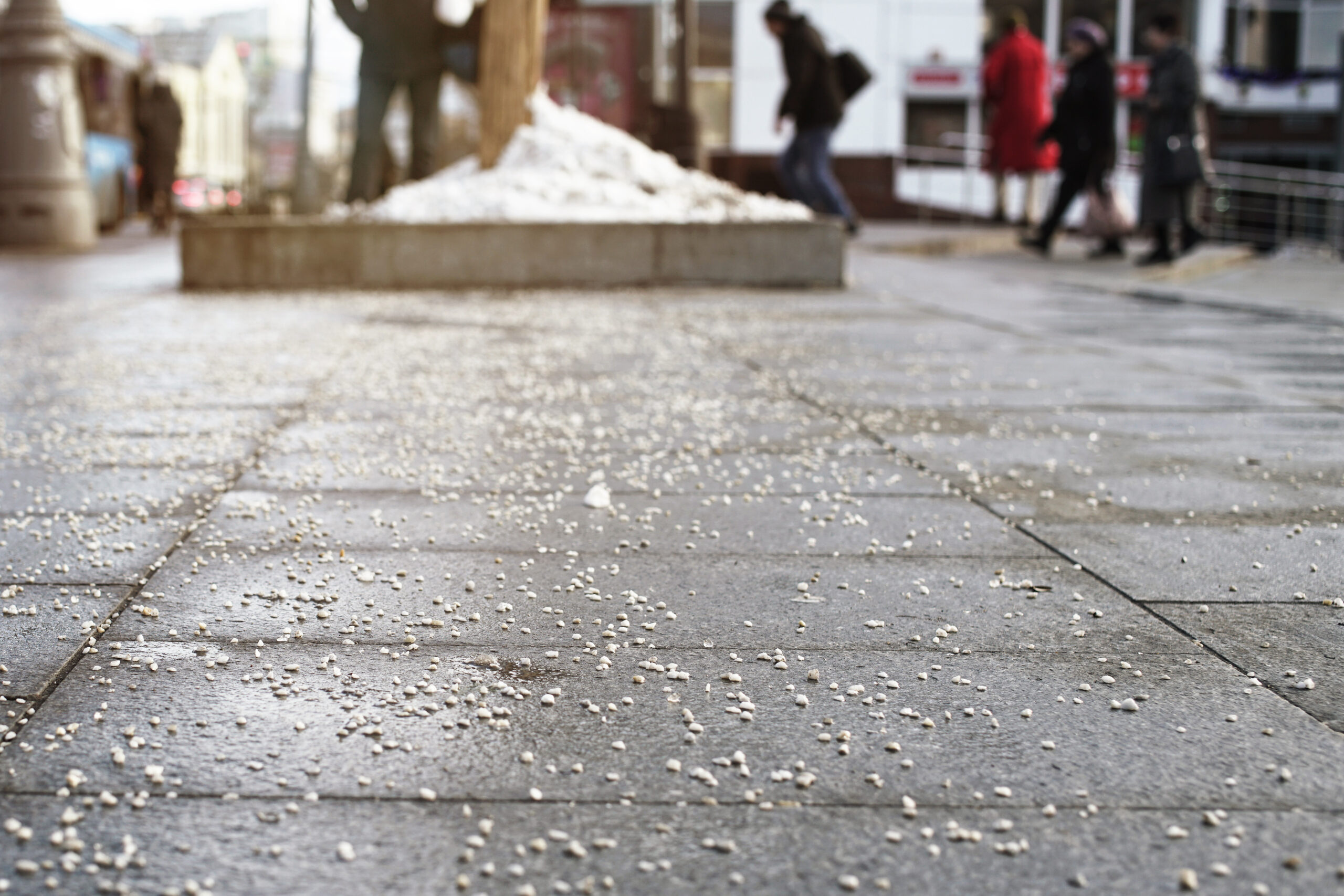
Why Sidewalk Salting Matters for Liability
When winter hits, one slick walkway can lead to painful injuries, expensive claims, and lasting reputation damage. Proper ice control is not just about customer experience. It is a core safety responsibility and a major factor in sidewalk salting liability. If a business ignores salting or applies the wrong products at the wrong time, a slip-and-fall incident can turn into a claim for medical bills, lost wages, and more. Even if you carry insurance, the long-term cost of a claim, higher premiums, and lost trust can be significant.
- Slip-and-fall injuries can bring medical costs, pain and suffering claims, and time-consuming legal action.
- Employees who fall may trigger workers compensation claims and lost productivity.
- Poor winter maintenance can hurt accessibility and create ADA compliance concerns.
- Insurers may raise premiums or add exclusions after repeated incidents tied to poor ice control.
How Sidewalk Salting Liability Works
Your general duty to maintain safe walkways
Most business owners have a duty to use reasonable care to keep walkways safe for customers, employees, and visitors. In areas like Kenosha, Wisconsin, where freeze-thaw cycles and lake-effect systems are common, that duty often includes timely shoveling, salting, and monitoring for refreeze. Local ordinances may set deadlines for clearing snow and managing ice. Failing to meet those standards may increase your sidewalk salting liability, especially when the hazard was predictable and preventable. While specific laws vary by city and situation, the core idea is simple. If you know or should know about icy conditions on your property, you must take reasonable steps to reduce risk. This typically means having a plan, following it, and documenting what you did and when you did it.
Who can be held responsible?
- Property owners who control the sidewalks and parking areas.
- Commercial tenants if the lease assigns snow and ice duties to the business.
- Property managers who oversee maintenance and hire vendors.
- Snow and ice contractors if their work was negligent or not done as agreed.
Contracts, local rules, and the facts of the incident decide who holds what responsibility. Always review leases and service agreements for clear roles, response times, and documentation requirements. When the roles are unclear, sidewalk salting liability tends to land on whoever is in the best position to prevent harm. This information is general and not legal advice. For specific situations, consult an attorney.
How insurance responds
Your commercial general liability policy may respond to slip-and-fall claims from visitors. Workers compensation may cover employees. However, insurers can ask for maintenance logs, weather details, and service records. If documentation is missing, you may face more pushback or longer claim timelines. Repeated claims may also lead to higher premiums or changes in coverage.
What Happens When Sidewalks Are Not Salted or Salted Poorly
- A storm or freeze warning is issued. Without a plan, no pretreatment happens and snow bonds to the pavement.
- Pedestrian traffic compresses snow into slick ice. Temperatures drop, making rock salt less effective.
- A customer slips on black ice in front of your door. An incident report is not completed and no photos are taken.
- Video footage later shows no visible treatment or late treatment, which weakens your defense.
- The injured person files a claim. The adjuster asks for logs, timestamps, invoices, and product types used.
- No logs are available. Without proof, it is harder to show reasonable care under the conditions.
- Your business covers medical costs or sees an insurance payout plus potential premium increases.
- Online reviews mention unsafe conditions, which hurts foot traffic and trust.
- Refreeze returns the next morning. Without follow-up, the cycle repeats and risk stays high.
This chain of events is common and avoidable. A reliable plan, correct products, and credible documentation can reduce sidewalk salting liability and keep people safe.
Common Mistakes That Create Liability
- Salting once and walking away, with no follow-up for overnight refreeze.
- Using only rock salt when temperatures are below its effective range, often around 15 degrees Fahrenheit.
- Failing to pretreat before storms, which allows bond formation on concrete.
- Applying too little product or spreading unevenly, leaving slick patches.
- Ignoring shaded areas, north-facing entries, ramps, and curb cuts that refreeze faster.
- Neglecting entrances and high-traffic crosswalks while focusing only on the parking lot.
- Storing salt where it can clump, get wet, or lose effectiveness.
- Skipping documentation and missing proof of timing, temperature, and product used.
- Choosing a deicer that damages concrete or landscaping, which raises repair costs and complaints.
- Not coordinating with plowing so that snow piles melt across cleared paths and refreeze overnight.
Best Practices to Reduce Sidewalk Salting Liability
Before the storm: plan and pretreat
- Map your property. Mark entrances, ADA routes, ramps, stairs, curb cuts, and shaded zones.
- Set weather thresholds and response times. Identify when to pretreat and when to recheck for refreeze.
- Use anti-icing where appropriate. Liquid brine or pre-wetted salt can prevent bonding and reduce total salt use.
- Stage materials and equipment near entrances to speed up response during peak hours.
- Assign responsibility in writing. Owners, tenants, and contractors should know who handles each area.
During the storm: choose the right product and apply correctly
- Match the product to the temperature. Rock salt is common but loses punch in very cold weather. Calcium chloride and magnesium chloride work better in lower temperatures.
- Use calibrated spreaders for even coverage. Uneven application causes slick gaps and wasted material.
- Treat priority zones first. Focus on doors, steps, ramps, and crosswalks, then work outward.
- Reapply if snow or traffic removes product. Busy entryways need more attention during business hours.
After the storm: monitor and respond to refreeze
- Check at night and early morning when temperatures drop and meltwater freezes.
- Move or contain meltwater so it does not flow across walkways and refreeze.
- Address black ice with a compatible blend or sand for traction when temperatures are extreme.
Documentation that stands up
- Log each service with time in and time out, conditions, and products used.
- Record pavement and air temperatures if possible. Note drift, freezing rain, or sudden drops.
- Take clear photos of treated areas and priority zones.
- Keep invoices and site maps tied to each event so you can respond quickly to any claim.
Materials and equipment that improve results
- Use quality rock salt for moderate cold, and calcium or magnesium chloride for lower temperatures.
- Consider treated salt or brine to improve performance and reduce bounce on sidewalks.
- Keep walk-behind spreaders maintained and calibrated. Replace worn parts that cause uneven flow.
- Store bagged and bulk material indoors on pallets to avoid moisture and clumping.
Protect the environment and your property
Chlorides can stress plants and corrode metal. Use the minimum effective amount and sweep excess back into storage. Choose products that are gentler on newer concrete and nearby turf, and consider sealing concrete to reduce surface damage. Responsible use reduces costs, complaints, and long-term repairs while still lowering sidewalk salting liability.
Why Work With a Professional Ice Management Partner
Managing winter conditions takes time, equipment, training, and attention to weather. A qualified contractor brings proven processes and reliable documentation. That makes it easier to keep walkways safe and to show reasonable care if a claim is filed. The right partner reduces sidewalk salting liability while freeing your team to focus on customers and operations.
- 24/7 weather monitoring and response plans built for your site.
- Correct products matched to real-time temperatures and surface conditions.
- Trained crews who understand ADA routes, ramps, and high-risk zones.
- Service logs, photos, and timestamps that support your defense if an incident occurs.
- Coordination with plowing so piles and meltwater do not undo your hard work.
How doctors of landscaping Handles Sidewalk Salting in Kenosha
doctors of landscaping is a locally owned and operated landscape company based in Kenosha, Wisconsin, with more than 30 years of experience. What started as a small lawn maintenance business has grown into a full-service provider for residential and small commercial properties. The team delivers lawn mowing, edging, and clean-up; bed and planting services; hardscaping like patios, walkways, and retaining walls; seasonal cleanups; and reliable snow removal. That same focus on detail, proper installation, and dependable scheduling powers their winter ice management services.
- Local expertise. doctors of landscaping understands Kenosha’s lake-effect patterns, freeze-thaw cycles, and how fast black ice can form near storefronts and ramps.
- Right product for the conditions. Crews use rock salt, treated salt, brine, and cold-weather blends depending on temperature and surface type.
- Precise application. Calibrated equipment helps ensure even coverage and reduces waste.
- Clear documentation. Service logs and photos support your safety program and can help with insurance questions.
- Full-service approach. From snow plowing to sidewalk salting, one partner handles it all, which reduces gaps that increase sidewalk salting liability.
- Clean, careful work. Crews prioritize neat pathways, thorough cleanup, and minimal impact on landscaping and hardscapes.
Service packages that fit your risk tolerance
- Zero-tolerance sidewalk care for sites that require clear, ice-free conditions around the clock.
- Event-based service for storms, with follow-up checks for refreeze.
- Seasonal plans with defined triggers, response times, and communication protocols.
The doctors of landscaping team pairs efficient scheduling with a customer-first approach. You get timely service, clear communication, and one reliable company that can manage your outdoor needs year-round. That makes planning easier and lowers sidewalk salting liability through professional execution and documentation.
Simple Checklist for Business Owners
- Review your lease and local rules to confirm who is responsible for sidewalk salting.
- Create a site map that marks entrances, ADA routes, stairs, ramps, and shaded spots.
- Set weather triggers for pretreatment, active treatment, and refreeze inspections.
- Choose products that match expected temperatures and your surface materials.
- Calibrate spreaders and store materials in a dry, accessible place.
- Coordinate plowing and sidewalk care so piles do not drain across walkways.
- Document every visit with logs, photos, and product details.
- Train staff to report slick spots and place temporary signs while help arrives.
- Schedule early morning and late-night checks during freeze-thaw cycles.
- Work with a reliable partner like doctors of landscaping to implement and maintain your plan.
FAQs About Sidewalk Salting Liability
If I shovel, do I still need to salt?
Often yes. Shoveling removes snow, but it can leave a thin layer that packs into ice. Salting or applying another deicer helps break the bond and reduce slipperiness. Without it, you may still face sidewalk salting liability if someone slips on leftover ice.
How much salt should I use?
Follow the product label and calibrate your spreader. More is not always better. Over-application wastes money, can harm landscapes, and does not always improve traction. Even coverage at the correct rate usually works better than heavy piles that people step around.
Does placing a caution sign protect me from claims?
Warning signs can help alert customers, but they do not replace the duty to maintain safe walkways. A sign plus prompt salting and documentation is far stronger for reducing sidewalk salting liability than a sign alone.
Is black ice my responsibility if I cannot see it?
Black ice is hard to see, but it is predictable near downspouts, shaded areas, and spots with meltwater. Regular checks and timely treatment in known risk zones can reduce incidents and support your defense if a claim arises.
What if the sidewalk belongs to the city?
Many cities require adjacent property owners or tenants to clear and maintain sidewalks. Check your local ordinance and your lease. Even if the city owns the sidewalk, you may still have duties under local rules or agreements, which can affect sidewalk salting liability.
Ready to Reduce Risk?
Winter safety is not guesswork. It is a plan, the right materials, and proof that you acted at the right time. If you want fewer slips, better documentation, and a partner you can trust, connect with doctors of landscaping. As a Kenosha-based company with more than 30 years of experience, they combine reliable scheduling, detailed execution, and complete clean-up with the technical know-how to match products to conditions. Ask for a free estimate, choose a service plan that fits your risk tolerance, and head into each storm with confidence that your sidewalk salting liability is under control.







Leave A Comment