
Why Edging Matters More Than You Think
Lawn edging does more than draw a clean line. It keeps grass, weeds, and soil in their proper places, protects sidewalks and beds, and gives your property a polished look. Skip edging for too long and your yard can shift from tidy to tired in a hurry. In a climate like Kenosha, where cool-season grasses surge in spring and fall, the effects show up fast. If you are searching for lawn care Kenosha WI, knowing how edging fits into a complete maintenance plan can save you time, money, and stress. The Doctors of Landscaping sees the difference proper edging makes every day, and we help homeowners turn uneven, overgrown borders into sharp, durable edges that hold their shape.
The Hidden Costs of Skipping Lawn Edging
Overgrowth and Turf Creep
Grass does not respect borders on its own. When you skip edging, turf spreads into garden beds, walkways, and driveway seams. This creep often happens under mulch, so you may not notice until you see tufts of grass popping through. The result is more hand weeding, more trimming, and more frustration. Mower wheels also struggle to hug an irregular edge, which can lead to scalping or ragged cuts. Over time you end up with a shaggy look even right after mowing.
Weeds and Pest Harborage
Gaps and frayed borders trap moisture, fallen seed heads, and debris. That thin layer of damp organic matter becomes a magnet for weeds like crabgrass and plantain. It also creates cover for ants, slugs, and voles. Without a defined edge, it is easier for insects to move between the lawn and beds. Once settled, they are much harder to remove. A clean edge removes that shelter and makes routine care more effective.
Water and Soil Problems
Skipping edging allows soil and mulch to creep onto sidewalks and patios, which blocks drainage. On the lawn side, encroaching turf creates a thatch lip that holds water. In Kenosha’s freeze and thaw cycles, pooled water can turn to ice along walks, and repeated cycles expand cracks. Excess moisture along the border also weakens turf roots and invites disease. Maintaining a defined trench or vertical cut lets water flow where it should and keeps your soil profile stable.
Damage to Hardscapes
Roots and rhizomes push against paver joints and asphalt edges. When left unchecked, they widen seams and encourage heaving. Mulch washing over pavers grinds grit into the surface and shortens the life of your patio or walkway. A precise edge is a protective buffer for hardscapes, which are often the most expensive elements in a yard. The Doctors of Landscaping often restores edges to reduce pressure on pavers and stop material migration.
Safety and Liability Concerns
Soil and mulch on sidewalks create slick spots. Unseen lips where turf hangs over a walkway can cause trips. For homes on busier streets or with frequent visitors, a clean edge is a simple safety measure. If your HOA or municipality has guidelines for lawn care, a neglected edge can also attract citations or warnings.
Curb Appeal and Property Value Loss
Even a healthy lawn can look messy without crisp edges. First impressions matter when selling or renting, and a sloppy border can make the entire property feel neglected. The visual line created by edging is one of the quickest ways to boost curb appeal. It frames garden beds, showcases mulch color, and makes the lawn look freshly cut longer.
How Long Is Too Long to Skip Edging?
There is no single rule, but for most cool-season lawns in Kenosha, every two to four weeks during peak growth is a safe range. In spring and early summer, edging may be needed more often. In mid-summer when growth slows, monthly or every six weeks may be enough. In fall, plan to reestablish edges before leaves drop and before hard frost sets the soil. After a heavy rain or an irrigation upgrade, check edges since softened soil is easier for grass to infiltrate. If you are unsure, look for these signs: grass creeping into beds, a fuzzy line along sidewalks, mulch sliding onto concrete, or small soil ridges at borders.
Technical Basics: What Proper Edging Includes
Defining a True Edge
A true edge is a vertical separation between turf and a non-turf area. It should be clean, consistent, and deep enough to discourage grass from crossing. The target is typically a two to four inch depth for a hand-cut trench separating lawn from bed or a precise cut along a hardscape’s joint. Depth varies with grass type and soil conditions, but the goal is the same: a barrier that keeps roots where they belong.
Tools That Get It Done
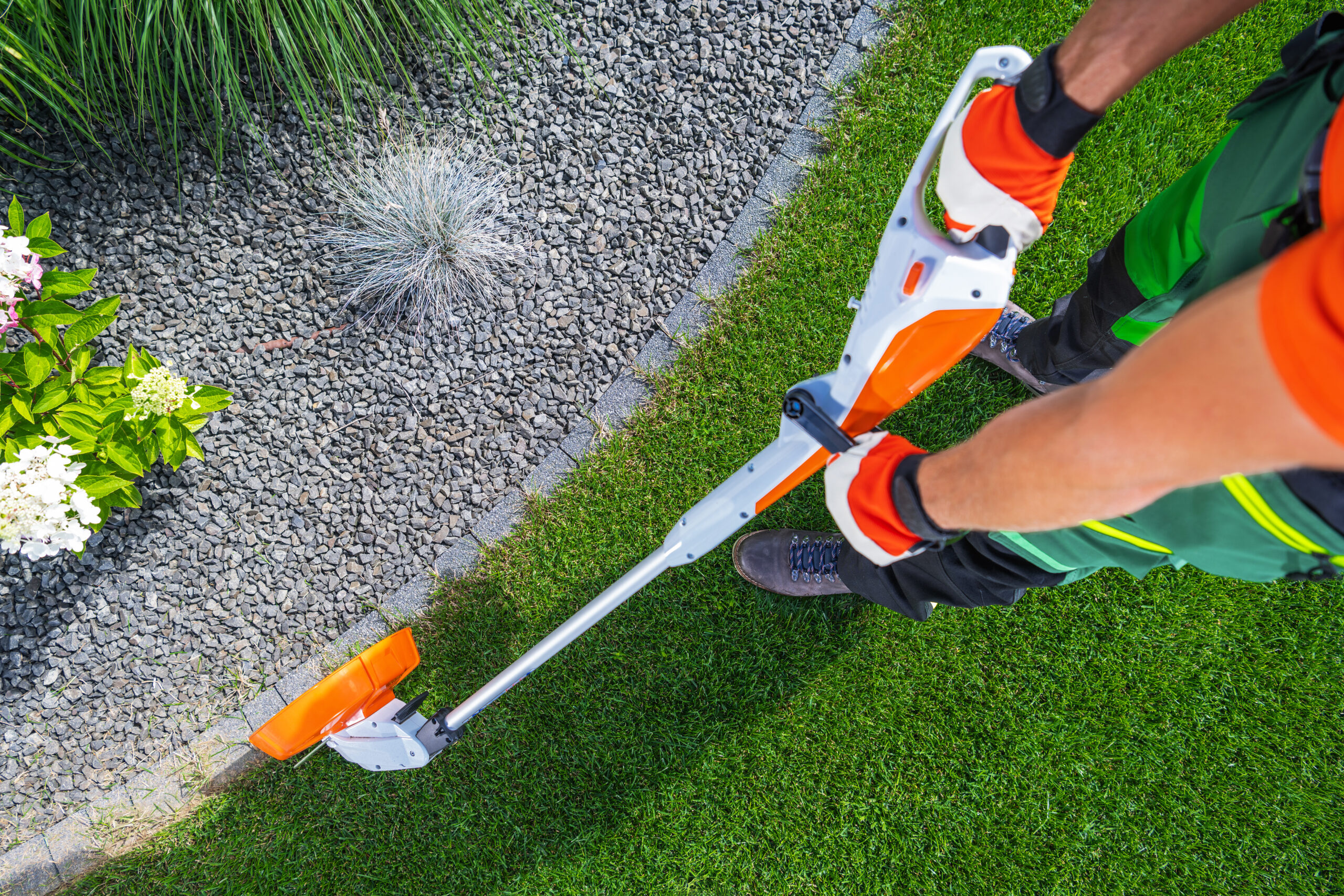
There are three common options. A stick edger uses a rotating steel blade to cut a straight vertical groove along sidewalks and driveways. A half-moon edger or spade is ideal for beds and curves where accuracy matters. A string trimmer can tidy edges weekly, but it should not be your only tool, since it often shreds rather than cuts. For neglected edges, a powered edger paired with a spade produces the best results.
Depth, Angle, and Clean Finish
For hard edges along concrete or pavers, a vertical blade path prevents undercutting. For landscape beds, a slight trench with a defined wall facing the turf keeps mulch in place and slows grass spread. Avoid beveling the lawn side too much, which invites collapse. After cutting, blow debris off hard surfaces, collect the sod stringers, and refresh mulch so the new edge is visible and protected.
Debris Removal and Inspection
Edging generates soil, sod, and thatch. Leaving this material in place cancels the benefits. Proper cleanup includes removing stringers, sweeping or blowing walks, and checking irrigation heads and landscape lighting along borders. The Doctors of Landscaping crews also inspect paver joints, look for settling, and reset shifted stones to lock in a clean finish.
DIY Edging vs. Professional Service
When DIY Works
If you have a small lot, basic tools, and time, DIY edging is manageable. Start slow, work in small sections, and maintain a consistent depth. Wear eye and ear protection, mark irrigation lines, and use a square to check vertical cuts. The key to success is consistency. A few minutes every week or two can keep edges clean once they are established.
When to Call Pros
Call a pro if your edges have been ignored for months, the turf has merged into beds, or roots have invaded pavers. Large lots, tight curves, steep grades, and heavy clay soils also benefit from professional equipment and methods. If you have irrigation near bed lines or a mix of hardscape borders, a professional team like doctors of landscaping can prevent accidental damage and restore edges faster.
What You Can Expect From The Doctors of Landscaping
The Doctors of Landscaping brings more than 30 years of local experience to every edging project. We start with a site assessment, note problem areas, and discuss how you use your space. We set a consistent depth, correct angles along beds, protect hardscapes, and remove all debris. If we find shifted pavers or mulch migration, we address it. We offer free estimates, efficient scheduling, and a clean finish so you can enjoy your yard right away. Our team can bundle edging with mowing, bed weeding, mulch refresh, and seasonal cleanups. For homeowners searching for lawn care Kenosha WI, we make it simple to work with one provider for everything outside.
Fixing a Lawn That Has Been Ignored
If edging has been skipped for a long time, do not worry. With the right steps, you can restore crisp, durable borders. Here is a straightforward plan our crews use in Kenosha.
- Walk the property and mark problem edges, irrigation heads, and lighting. Note areas where turf has grown under mulch or into paver joints.
- Set a reference line using a hose or string to guide curves and keep borders uniform.
- Make a vertical cut along sidewalks and driveways with a stick edger. Clear debris after each pass so you can see progress.
- Use a half-moon edger or spade to carve a trench edge along beds. Aim for a two to four inch depth with a defined wall facing the turf.
- Remove the lifted sod strip and any root mat. Shake off soil and compost the green waste.
- Inspect paver edges and reset any stones that have shifted. Add polymeric sand if needed to tighten joints.
- Install a physical barrier where grass pressure is highest or where bed lines meet steep slopes. Options include steel edging, paver restraint, or deep-cut trenching with regular maintenance.
- Top up mulch to two to three inches, keeping it off the grass and away from tree trunks. Mulch supports the new edge and controls weeds.
- Overseed any thin lawn sections you disturbed. Water lightly and consistently until seed establishes.
- Set a maintenance schedule. Touch up edges every two to four weeks in spring and fall, monthly in summer, and after heavy storms.
Seasonal Timing in Kenosha, WI
Kenosha lawns usually feature cool-season grasses like Kentucky bluegrass, fescue, and perennial ryegrass. Growth surges in April through June, slows in mid-summer, and rises again in September and October. Plan to reestablish edges early in spring before the growth spike. Maintain them lightly through summer. Refresh and deepen edges in fall when soil is still workable. Before winter, clear soil and mulch off walks, keep edges visible, and prepare for snow. The Doctors of Landscaping can pair edging with spring and fall cleanups, leaf removal, and snow removal so your property is cared for year round.
Common Questions About Lawn Edging
- How often should I edge? In Kenosha, aim for every two to four weeks during spring and early summer, monthly in mid-summer, and a full reset in fall.
- Can I use a string trimmer for edging? A trimmer can maintain the look between cuts, but it should not replace a vertical blade or spade. It tends to fray grass rather than create a clean edge.
- How deep should the edge be? Two to four inches works for most lawns. Deeper cuts help in aggressive turf or along sloped beds.
- Will edging harm my lawn? When done correctly, edging protects turf by reducing compaction and improving airflow along borders. Avoid cutting too wide or tearing roots outside the edge line.
- Do I need a physical barrier? Not always. A clean trench and regular maintenance work well. In high pressure areas, steel or paver restraints can reduce upkeep.
- What about pets and kids? Clean edges are safer since they reduce trip lips and keep debris off hard surfaces. Always tidy after edging to remove loose material.
- Can professionals save me money? Yes. Proper edging preserves mulch, reduces weed growth, and protects patios and walks. That means fewer repairs and less product waste.
- Is edging included with mowing? The Doctors of Landscaping offers mowing, edging, trimming, and cleanup packages. You can choose weekly or biweekly service with add-ons for beds and seasonal work.
Why Choose The Doctors of Landscaping for Lawn Care Kenosha WI
If you want reliable lawn care Kenosha WI, choose a team that understands local soils, weather, and turf. The Doctors of Landscaping is a locally owned and operated company with more than 30 years of experience. What started as a small maintenance service has grown into a full-service provider because we focus on the details that matter, including clean edges, sharp mower blades, and proper installation practices. Our clients trust us because we show up on time, do the work right, and leave the site clean.
- Local expertise in Kenosha soils, freeze and thaw patterns, and cool-season grasses.
- Full services: mowing, edging, bed care, plantings, patios, walkways, retaining walls, seasonal cleanups, and snow removal.
- Proper tools and methods for crisp, durable edges along both hardscapes and beds.
- Reliable scheduling with reminders and efficient crews.
- Detailed cleanup after every visit.
- Free estimates and clear communication.
- One provider for residential and small commercial properties.
Get Started Today
If your edges are fuzzy, your mulch is drifting, or your pavers are starting to shift, do not wait. Small problems get bigger with each growth cycle. For dependable lawn care Kenosha WI, contact The Doctors of Landscaping. We will assess your property, provide a free estimate, and schedule service that fits your timeline. Whether you need a one-time edge reset or a full maintenance plan with mowing, bed care, seasonal cleanup, and snow removal, doctors of landscaping has you covered. Restore clean lines, protect your hardscapes, and enjoy a yard that looks great all season.


Leave A Comment