
Deicing sidewalks best practices guide our salt policy for safe walks without over-salting. Learn responsible methods, reduce liability and ice risks – read now.
When winter hits Southeast Wisconsin, safe walkways cannot be left to chance. At The Doctors of Landscaping, also known as the doctors of landscaping, we combine proven science, careful planning, and hands-on expertise to keep sidewalks and entryways safe while protecting your concrete, landscaping, and the environment. This blog explains our salt and de-icing policy and shares deicing sidewalks best practices that home and small business owners in Kenosha and nearby communities can use to prevent slips and reduce salt use.
For more than 30 years, The Doctors of Landscaping has served residential and small commercial properties with detailed, dependable service. We bring the same customer-first approach to winter maintenance that we apply to mowing, planting, hardscapes, and seasonal cleanups. Our goal is simple: deliver safe footing without over-salting.
Why a Smart Salt Policy Matters
Safety and Liability
Sidewalk ice is a top cause of winter injuries. Fast action, correct product choice, and proper application greatly decrease slip risks. Properly handled, deicing sidewalks best practices reduce liability by documenting what was applied, when, and why. The doctors of landscaping keep sidewalks clear so you can open on time and welcome guests with confidence.
Protecting Concrete, Pavers, and Plants
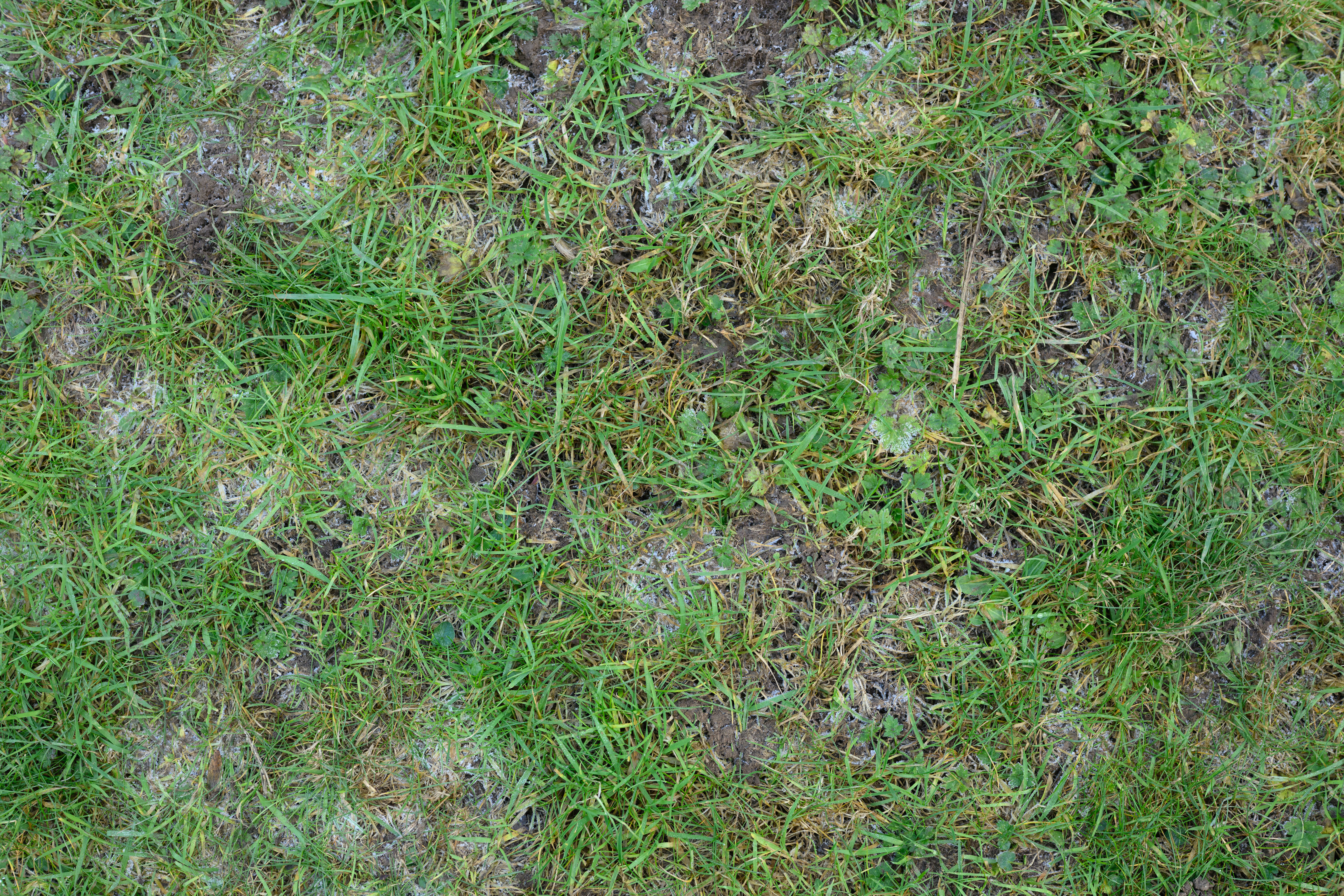
Excess salt can pit concrete, discolor pavers, and damage turf and shrubs. The right product at the right rate preserves your investment. Our crews receive training on substrate types, including broom-finished concrete, decorative pavers, and natural stone, to choose the safest method for each surface.
Environmental Responsibility
Salt runoff affects soil and waterways. In Kenosha and the surrounding Lake Michigan watershed, responsible use is essential. Our policy focuses on using the least amount of salt required to achieve safe footing, combined with mechanical removal and targeted applications that minimize waste.
Our De-Icing Strategy
Anti-Icing vs. De-Icing
We use an anti-ice-first approach whenever conditions allow. Anti-icing applies a light treatment before accumulation begins so snow and ice have a harder time bonding to the surface. That means faster clearing after the storm and less overall salt. When ice has already formed, we switch to de-icing and use products designed for the pavement temperature and surface type.
Material Selection Based on Temperature
No single product works best for every storm. We match materials to the actual pavement temperature, not just the air temperature. Our standard toolkit includes:
- Rock salt (sodium chloride): Cost-effective above about 15 to 20 degrees Fahrenheit. We use brine-enhanced rock salt where it makes sense to improve performance and reduce bounce.
- Calcium chloride: Effective to around -25 degrees Fahrenheit. Useful for spot treatments and thick ice when temperatures are very low.
- Magnesium chloride: Effective to around -10 degrees Fahrenheit with lower plant burn potential than some chlorides.
- Treated salts: Salt pre-wet with brine or organic additives to speed melting, reduce scatter, and improve results at lower temperatures.
- Traction aids: Clean sand or fine aggregate to boost grip on colder days when melting is limited, especially on slopes and shaded areas.
Using the right material is central to deicing sidewalks best practices. It cuts waste and protects surfaces while improving safety.
Application Rates and Calibration
Using more salt than needed does not improve safety. It increases damage and cost. Our spreaders are calibrated at the start of the season and rechecked regularly. We adjust flow rates by material type, granule size, and crew walking speed. Calibration data is logged as part of our service record so our team applies consistent amounts that match site needs and weather conditions.
Timing Matters
We prioritize mechanical removal first: shovel, brush, or blow. Then we apply material to loosen remaining ice and prevent refreeze. We avoid applying before heavy snow has been removed to reduce waste. After material is down and melting starts, we return to scrape loosened slush so less refreezes overnight.
Weather Monitoring and Decision Making
Our team tracks storm timing, pavement temperatures, dew point, wind, and refreeze risk. Decisions are based on forecast and on-site conditions. For example, if temperatures will drop after sunset, we plan a late-day touch-up at high-traffic areas to prevent black ice. If a January thaw is on the way, we may pause applications and rely on mechanical removal to avoid unnecessary salt use.
The Doctors of Landscaping Sidewalk De-Icing Steps
- Inspect and mark hazards. We note uneven slabs, expansion joints, drains, and door thresholds that may need extra attention.
- Mechanical removal first. Shovel or use a snow pusher to remove snow down to a thin layer, and brush steps and tight corners.
- Targeted application. Apply the correct de-icer at a calibrated rate only where needed. Avoid piles against turf or plant beds.
- Dwell time. Allow the material to work. When ice breaks bond, return to scrape slush away from the surface.
- Final pass and traction. Add light material in shade, slopes, or north-facing entries to maintain grip through the night.
- Documentation. Record materials, rates, timing, and observations to support quality control and liability protection.
Deicing Sidewalks Best Practices for Property Owners
Before the Storm: Prepare Surfaces and Tools
- Clear leaves and debris in fall so snow does not bond to organic material.
- Repair low spots where water pools and refreezes.
- Stock the right products for your surfaces and typical temperatures. Keep a scoop, ice chisel, and stiff broom near each entry.
- Use a sealing product approved for your concrete or paver type to reduce surface absorption, especially on new installations.
During and After Snow: Work Smart
- Shovel early and often. Removing accumulation early reduces the amount of salt needed later.
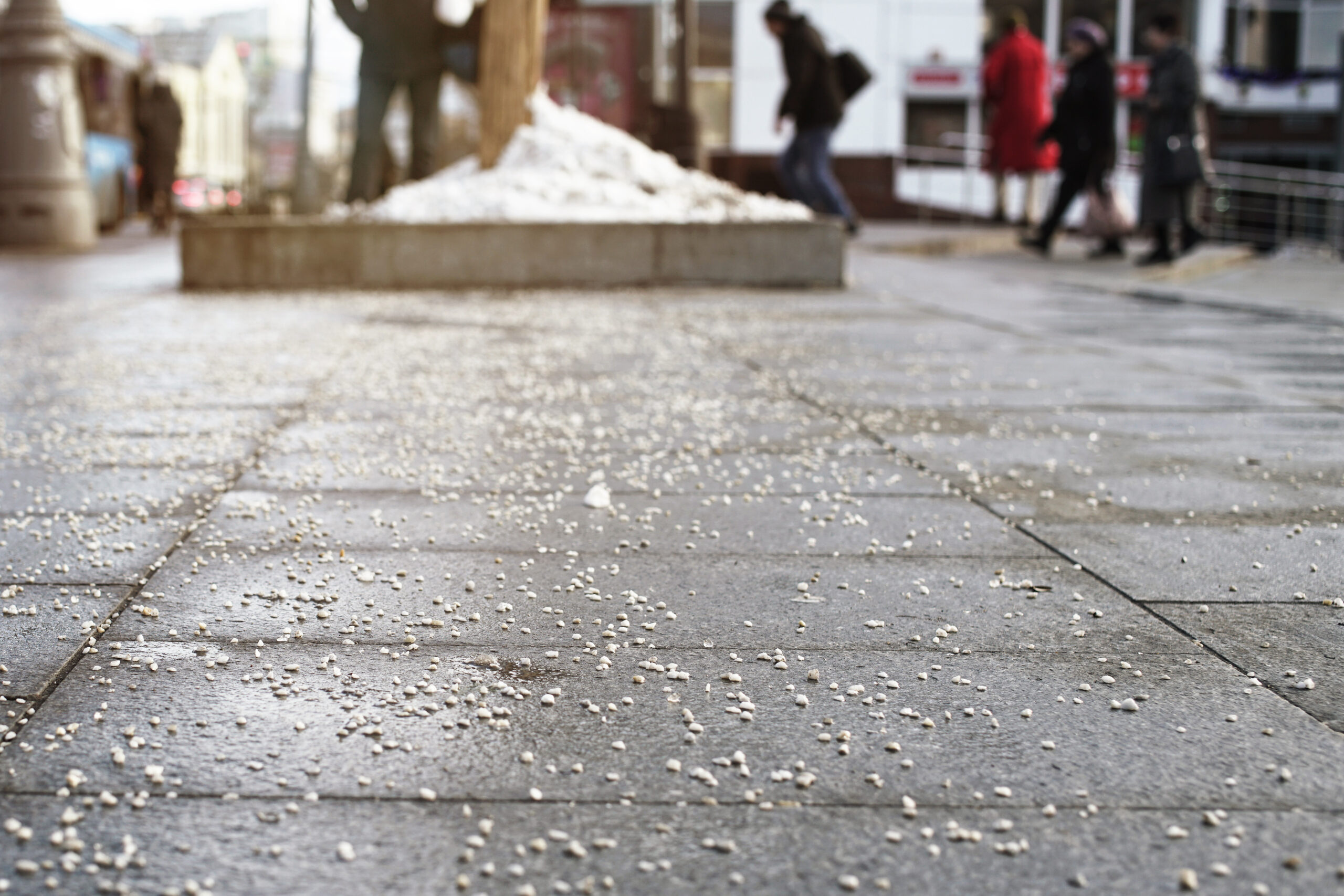
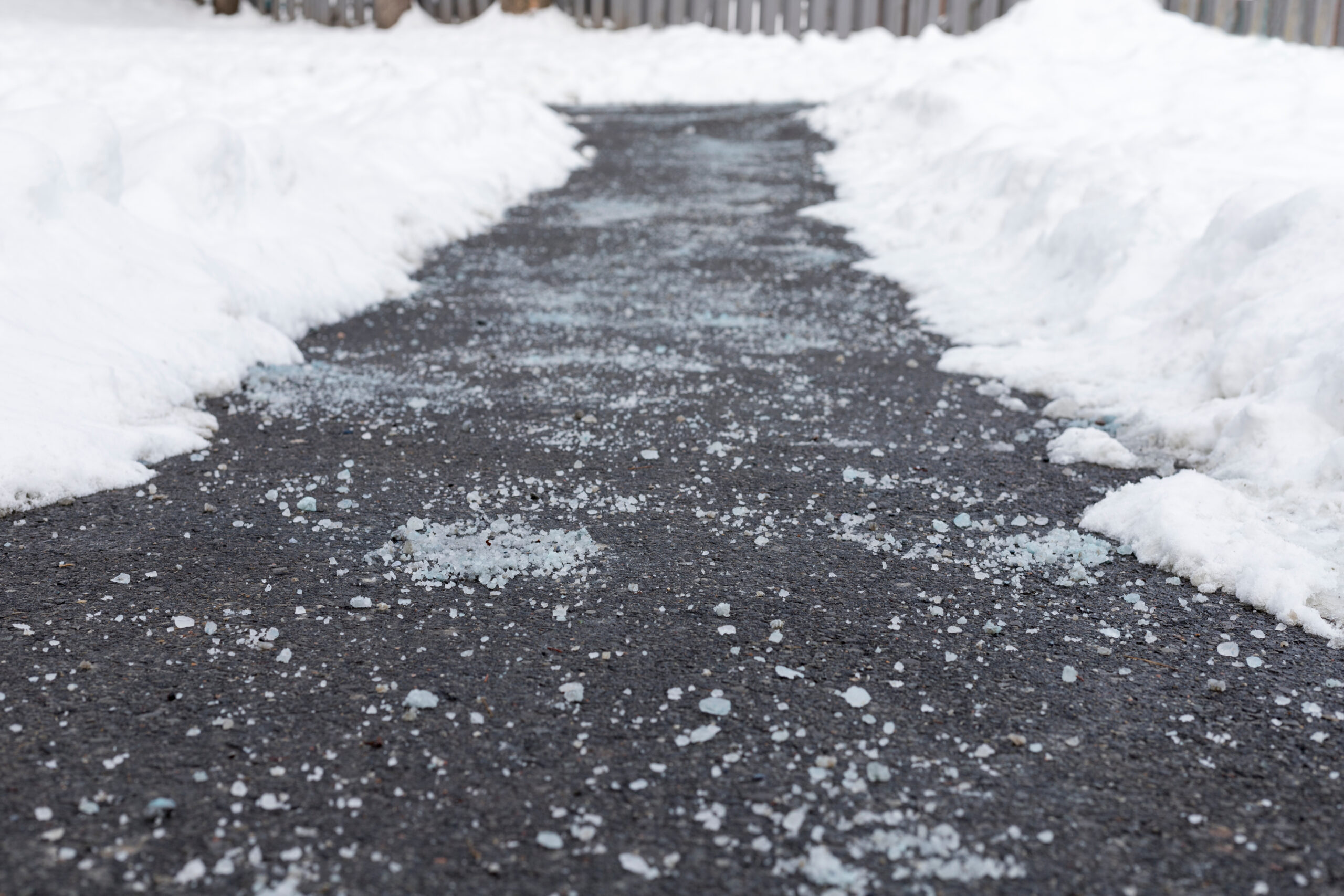
- Apply de-icer in a light, even pattern. Aim for a few pellets per footprint, not a solid layer.
- Focus on high-traffic paths first: entryways, mailbox areas, sidewalk corners, and curb ramps.
- Return to scrape slush once melting begins. This step is critical and often skipped. It prevents overnight refreeze.
- Use traction material when it is too cold for melting. Sweep it up later and reuse it to keep drains clear.
Protect Concrete, Pavers, Pets, and Plants
- For first-year concrete, avoid chloride de-icers. Use sand or a product labeled safe for new concrete.
- Keep de-icers off decorative stone and natural flagstone that may be vulnerable to scaling.
- Store salt in a dry, covered container. Wet salt clumps and spreads unevenly, causing waste.
- Choose pet-friendly products where animals walk. Rinse paws after walks to avoid irritation.
- Create snow storage zones away from planting beds so salt-laden meltwater does not damage roots.
Reducing Over-Salting Without Sacrificing Safety
Use Brine and Pre-Wet Methods
Brine is a solution of salt and water sprayed lightly on surfaces before a storm. It prevents bonding and reduces the total salt needed later. Pre-wetting rock salt with brine or organic additives at the spinner helps pellets stick, so you get more melt per pound. The doctors of landscaping use pre-wet methods when conditions warrant to cut bounce and scatter.
Choose Additives and Alternatives Wisely
- Organic additives help salt work at lower temperatures with less product.
- Calcium chloride flakes or pellets work fast in very cold weather, which means smaller amounts do more work.
- Sand or fine aggregate improves traction when melting is not practical. Plan to sweep it up to keep drains clear in spring.
Smart Equipment and Techniques
- Use spreaders with side guards to keep material on the sidewalk and off lawns or beds.
- Switch to pushers and upright scrapers that shave compacted snow without gouging surfaces.
- Carry a hand scoop for spot treatments so you are not tempted to overuse a broadcast spreader.
Documentation, Compliance, and Peace of Mind
Documenting winter service is a best practice that benefits property owners and service providers. The Doctors of Landscaping maintains a digital record of service times, conditions, materials used, and photos for select sites. For businesses, this record can support compliance with local ordinances and provide a clear timeline if an incident occurs. For homeowners, it ensures consistent care and gives you confidence that your sidewalks meet community expectations.
Frequently Asked Questions
How much salt should I use on a sidewalk?
As a general rule, you need only a light scattering, not a carpet of salt. Aim for a few pellets per footprint. If you see undissolved salt after the area is safe, you likely used too much. Sweep and reuse any excess granules.
What if temperatures are too cold for rock salt?
Below about 15 degrees Fahrenheit, switch to calcium chloride or magnesium chloride, or focus on traction with sand. In extreme cold, mechanical removal and traction are often better than trying to melt ice.
Is salt safe for concrete?
Moderate, correct use is generally safe for mature, properly cured concrete. Avoid de-icers on new concrete for the first winter. Use products labeled concrete-safe and follow the manufacturer’s instructions. Rinse surfaces in spring to remove residue.
How do I prevent refreeze overnight?
Scrape slush after melting begins, then apply a light follow-up treatment on shade-prone areas. Watch for runoff that can flow across walks and refreeze. Channel meltwater away when possible.
What is the difference between anti-icing and de-icing?
Anti-icing is a preventive treatment applied before accumulation to keep snow and ice from bonding. De-icing is applied to existing ice to break the bond. Anti-icing often reduces overall salt use and speeds clean-up.
Our Kenosha-Focused Approach
Winter in Kenosha can swing from lake-effect snow to deep freezes. The doctors of landscaping build service plans around local patterns: frequent light snows, wind-driven drift zones, and refreeze after sunny afternoons. We prioritize school sidewalks, storefront entries, and homeowner walkways that see consistent foot traffic. With efficient scheduling and tracked service windows, we keep your property accessible and looking sharp.
Why Choose The Doctors of Landscaping
- Local expertise: Three decades serving Kenosha-area properties with reliable, on-time service.
- Technical know-how: Calibrated equipment, trained crews, and documented best practices that deliver results.
- Surface protection: Methods tailored to concrete, pavers, and steps to reduce damage and staining.
- Environmental care: Targeted applications, pre-wet strategies, and responsible material choices.
- One trusted provider: From mowing and bed care to patios, retaining walls, seasonal cleanups, and snow removal.
We believe deicing sidewalks best practices should be practical, repeatable, and proven. Our salt and de-icing policy is built to protect people first, and then protect your hardscapes and landscape investment, all while avoiding waste.
Action Plan You Can Use Today
- Check your tools: Sharp shovels, a pusher, a scraper, a stiff broom, and a calibrated spreader.
- Stock the right materials: Rock salt for moderate temps, calcium or magnesium chloride for low temps, and sand for traction.
- Calibrate: Measure how much material your scoop or spreader applies in a test area so you do not guess.
- Pre-treat before the first inch when conditions allow. A light anti-ice treatment can save time and material.
- Shovel quickly and often. Do not let snow compact into ice under foot traffic.
- Apply a light, even amount of de-icer on remaining compacted areas only.
- Return to scrape loosened slush, then touch up shade and slopes for overnight safety.
- Record what you did and when. Consistent notes improve results and reduce risk.
Partner With The Doctors of Landscaping
If you want winter service that balances safety with stewardship, partner with The Doctors of Landscaping. Our team applies science, training, and local experience to every walkway, step, and landing. We deliver deicing sidewalks best practices without over-salting, backed by clear communication and dependable scheduling.
Ready for safer sidewalks this winter? Contact the doctors of landscaping for a free estimate and a custom sidewalk care plan. We will keep your property open, your guests confident, and your surfaces protected all season long.


Leave A Comment